You’d be surprised how much you can improve your own painting by learning about art that’s “stood the test of time.” However, it’s important to remember that art history has not given all the great artists of the past equal treatment.
Until recently largely overlooked, English artist Joanna Mary Boyce’s career was cut short when she died shortly after giving birth to her fourth child at the age of 29. She was married to a member of the Pre-Raphaelite Brotherhood (which she was unable to join as women weren’t allowed) and is often referred to as Joanna Mary Wells. Her work’s content – the inner lives of strong women – was not what the critics and historians were used to.
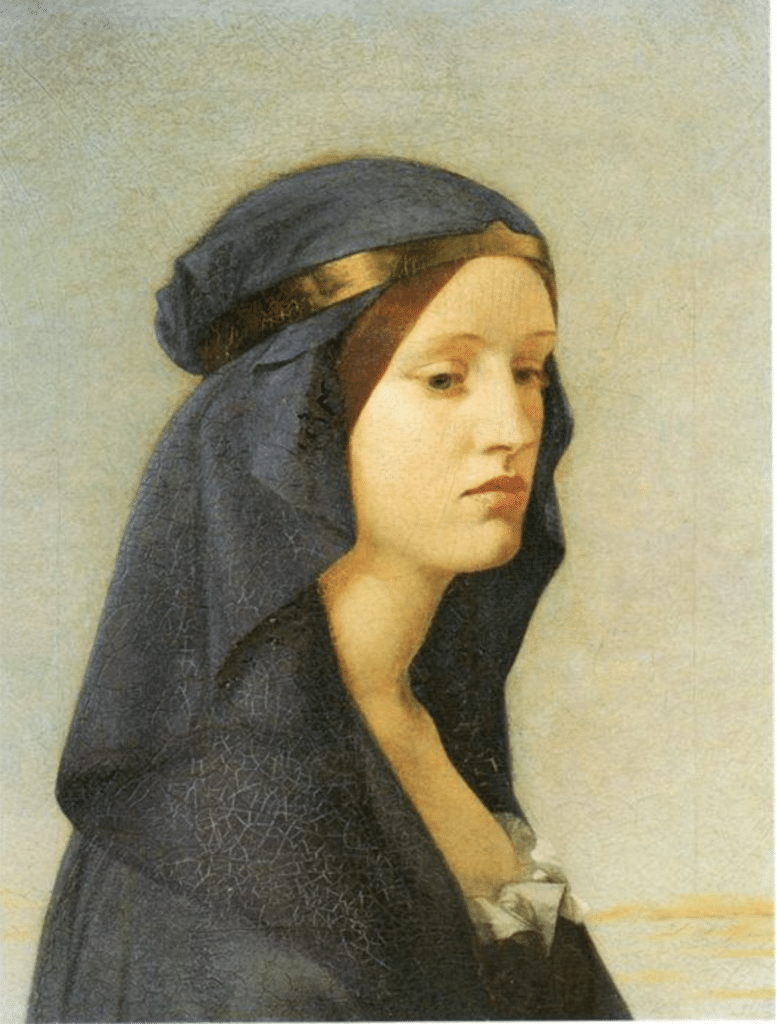
Joanna Mary (Wells) Joyce, Elgiva, 1855
Elgiva is from the 1850s, when Boyce first established herself as a portrait painter. Here portrayed with a mix of world-weary sadness and resolve, Elgiva was an English Queen. A politically enraged Bishop (“Odo the Severe”) seized her and had her branded on the face (after which she died) for siding with a rebellion. The artist’s brother bought this painting and to this day it’s still owned by the family.
The artist’s portrait of the mixed-race woman below comes from the end of her career, 11 years after Elgiva.
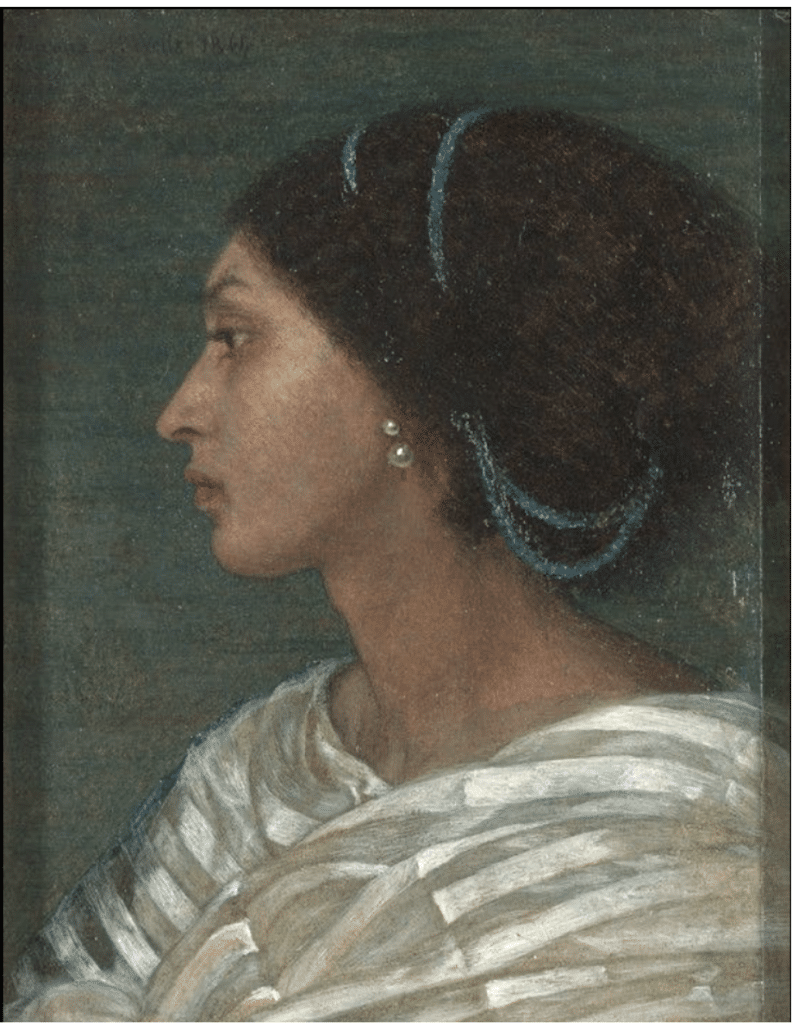
Joanna Mary (Wells) Boyce, Head of a Mulatto Woman, 1861
Boyce made the small portrait of Fanny Eaton (above) in the last year of her life in preparation for a large canvas of Zenobia, the ancient queen of Syria, which her premature death prevented her from completing. Fanny Eaton was a biracial model of Jamaican heritage who posed for Victorian artists such as Albert Moore, Frederick Sandys, and Dante Gabriel Rossetti, none of whom portrayed as strongly her inner strength and unassailable dignity.
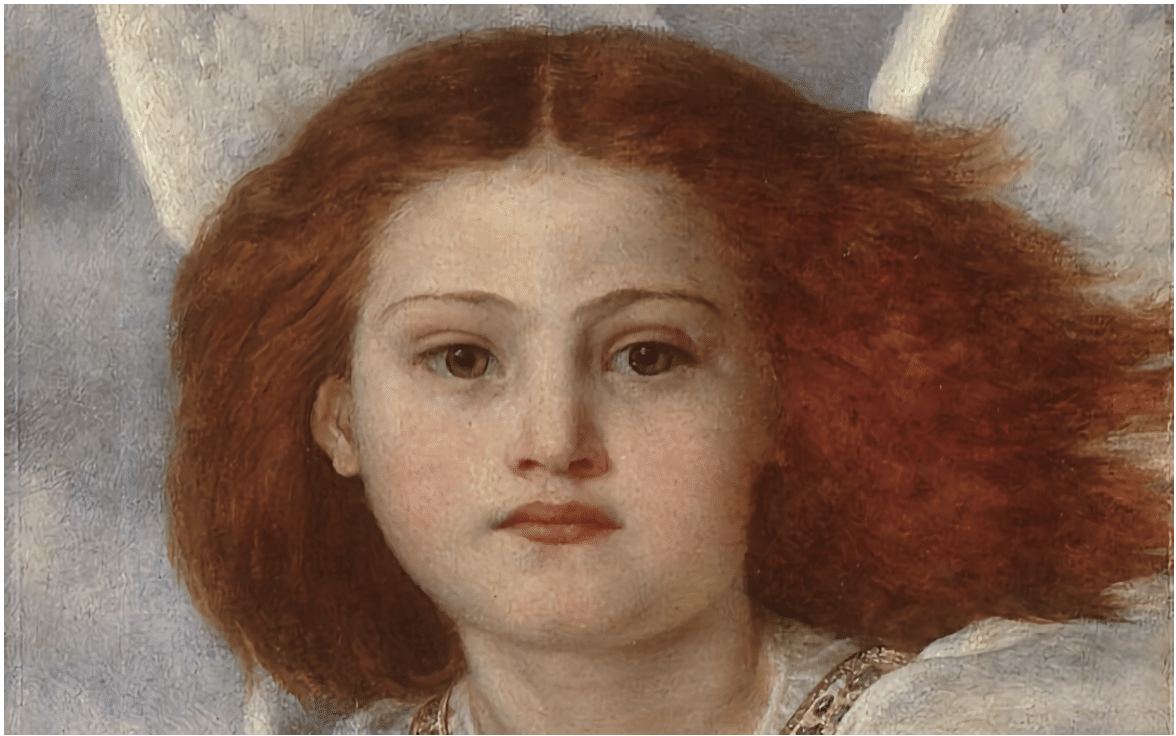
From start to finish, many of Boyce’s portraits evoke a simmering inward power. She was a master or resilient women – rebel queens, visionary priestesses and, as is the case in “Thou Bird of God” (top of page), an intensely unsentimental angel.
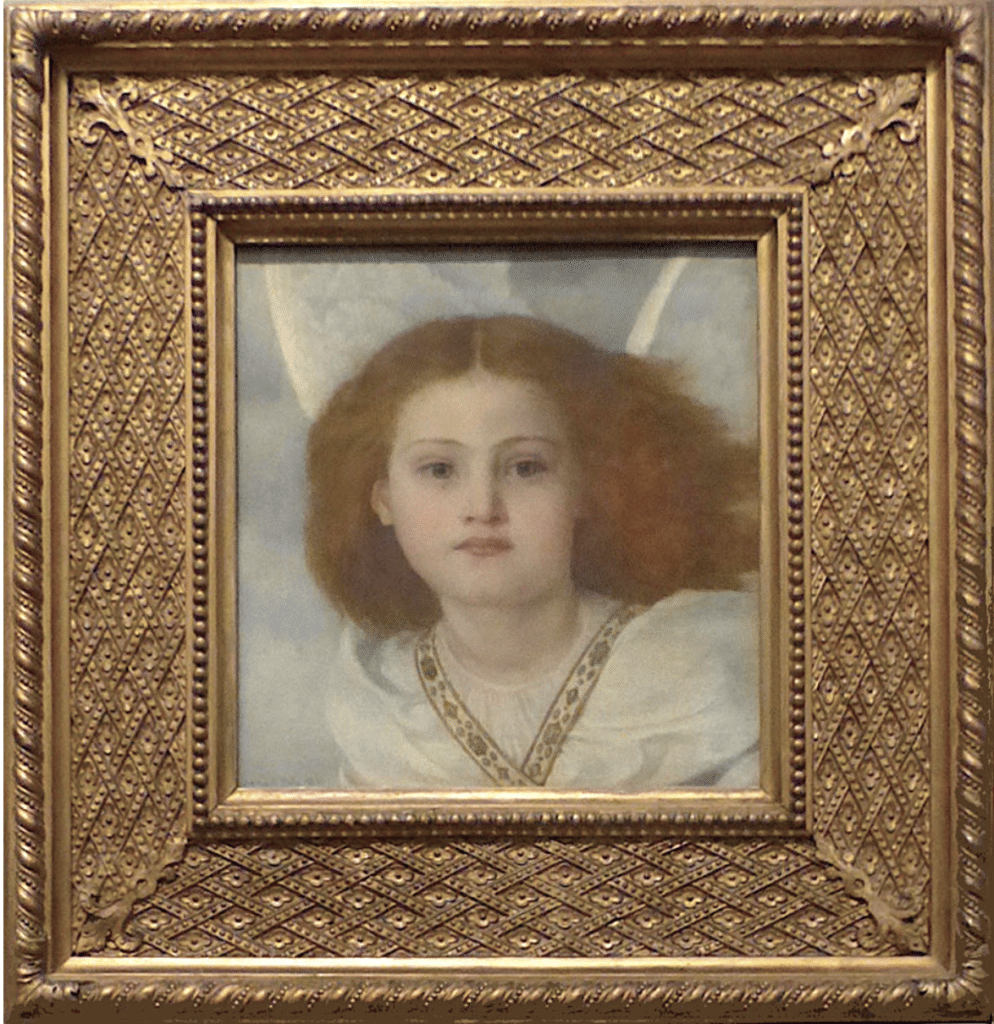
Joanna Mary Boyce (Wells), Thou Bird of God, 1861
The “Bird of God” in the title refers to a poem by Robert Browning, in which the poet uses a painting of an angel that he saw in Italy to explore ideas about life after death. The poem’s speaker is a woman who has recently died and is being guided by an angel through the afterlife. As I see it, in this work painted the same year that she died, Boyce literally (and prophetically) faces her own mortality. And the look on its face is – pitiless.
Look at the expression – this is not the face of a sentimental handmaiden of the Lord. It suggests, instead, the neutral gaze of divine and natural Law, something like what the ancient Greeks embodied in their goddess-figure Ananke, inescapable “Necessity” or Fate. The image strikes, as only Boyce would do, a startling balance of femininity, power, and truth that it took the art world another 100 years to fully recognize.
The final, unfinished picture she was working on at the time of her death was Gretchen.

Taken from Goethe’s Faust, Gretchen (or Margaret) is an innocent girl seduced and destroyed by Faust. The model was the German nurse who was looking after the artist’s children while Joanna was pregnant with her fourth child, giving birth to whom in the summer of 1861 cost her her life- just as her work was gaining confidence and momentum. The plans she left for further works seem to specialize in full-length female subjects like Gretchen and the rueful Gatherer below.

Joanna Mary Boyce (Wells), The Gatherer
In addition to her own artistic practice, Boyce kept a lifelong practice of seeking out and analyzing the artwork of the past and especially of her contemporaries. Boyce published some of this analysis as art criticism in the Saturday Review. Sadly, much of her work was destroyed in the bombings England experienced during W.W. II.
After a single show in 1935, Boyce’s work disappeared from history until 2019, when Britain’s National Gallery put together a “Pre-Raphaelite Sisterhood” exhibition. Since then, there’s been growing recognition of her achievements, especially through Internet art channels. We can only imagine the full-length figures of historic heroines she might have created if only lived she’d lived long enough to paint them.
Streamline offers several video titles showing female portraiture by a variety of artists, including, “In the Studio with Morgan Westling: Homework” and “Portraits: In Conversation with Rose Frantzen.” Check out both titles in this specially priced bundle.
The Black Figure in European Art

By Adrienne L. Childs
Images of black people have long been a significant feature of European fine art. Never simply representations, they have come down to us through a politically charged and aesthetically complex history that was explored in the exhibition “The Black Figure in the European Imaginary” (Cornell Fine Arts Museum at Rollins College in Winter Park, Florida, 2017). It gathered 31 paintings, sculptures, prints, and decorative artworks that span the 18th and 19th centuries. Though produced by European artists, all were from American collections, both public and private. The resulting assemblage offered a fascinating glimpse into how the European “imaginary” impacted our collective perception of black people on a global scale.
To be sure, individual black people were known in Europe during this period, but modes of understanding were mediated by their status as slaves and servants, or as exotic foreigners, and were frequently framed by preconceived ideas. Consequently, artists and viewers alike depended upon facts and fictions filtered through the lens of colonialism, imperialism, slavery, abolition, and, frankly, racism. Interestingly, the resulting imagery generally avoided the style of racist exaggerations prevalent in America during the same era. Black figures by European artists were far more likely to be depicted individualistically, often with depth and dignity. Yet, compelling as many of these images were, undercurrents of objectification, emphasis on servitude, and hierarchical attitudes about race resulted in images that were complicated, ambivalent, and nuanced.
Read the rest of this article on Realism Today.