
In honor of the many plein air painters traversing mountain-laden landscapes this summer, we continue with the second installment of “mountain tips” from three professional painters: Kathryn Stats, Tim Diebler, and next time, Paul Kratter
You could think of Tim Deibler’s style as excelling in capturing the freshness and energy of nature as the light changes. There’s a strong sense of movement in his paintings, even in solid masses, where paint handling picks out the landscape’s beauty and the surface washes over you in cascading rhythms.
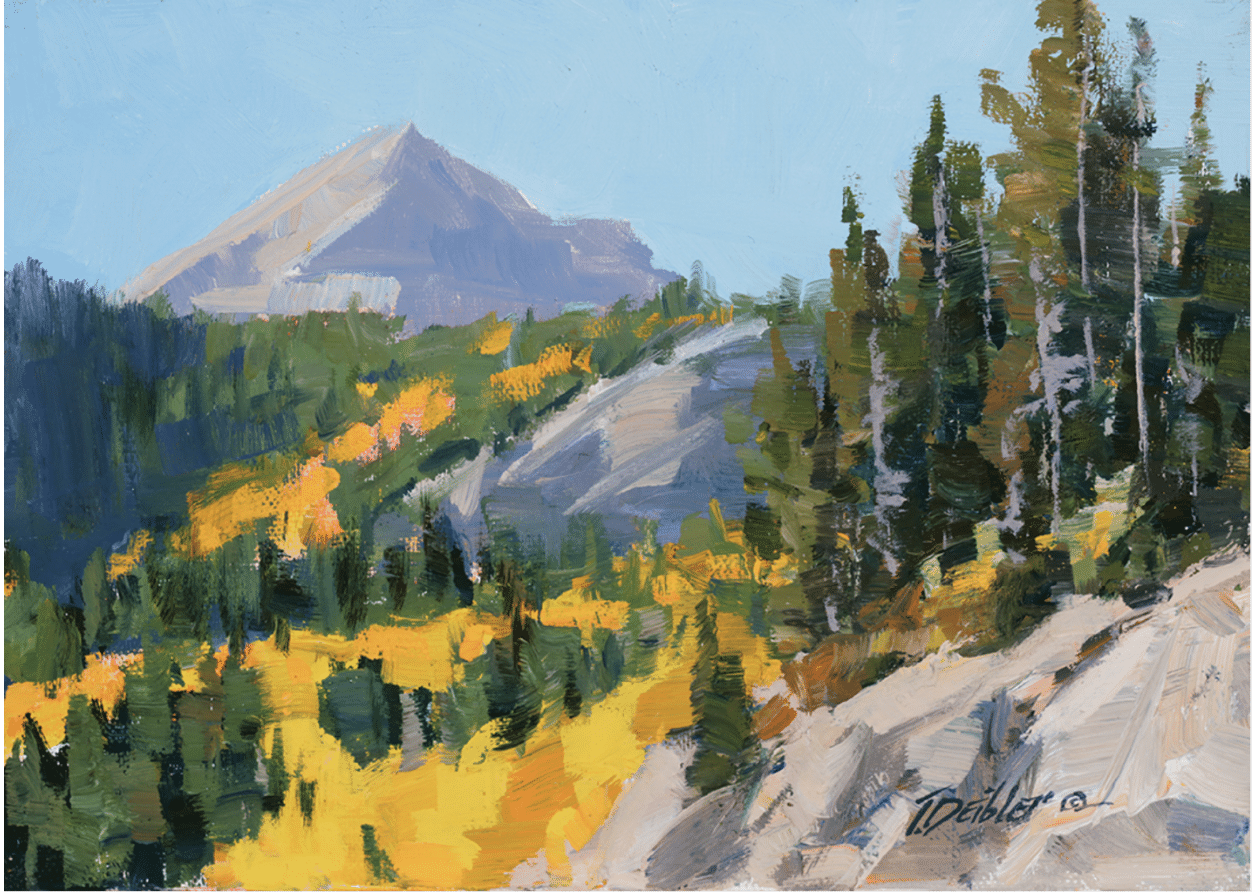
Tim Deibler, a 5×7 inch plein air appreciation of color, light, and the energy of the outdoors
Tim Deibler works quickly, allowing his brush to be especially expressive of the moment. His approach has everything to do with what the light is doing – but so does his feeling for the time of day, the time of year, even the elevation of what he’s seeing and how he paints it. His domain is the energy of the stroke, particularly brilliantly colored directional brushstrokes (each visible stroke in a painting has a direction, depending on where it’s “pointing”). Paul’s brushstrokes and edges (which can also be considered directional – they lead the eye, point you somewhere – see below) dance across the canvas, jostling and pushing against each other, creating a dynamic counterpoint of tension, movement, and release.
“Every time I look out the window or walk outside I’m in the mountains, making it much easier for me to observe the constant moods and nuances of nature,” he says. “My goal is to portray what I’m experiencing in nature, I want the viewer of my work to say, ‘I’d like to be there.’”
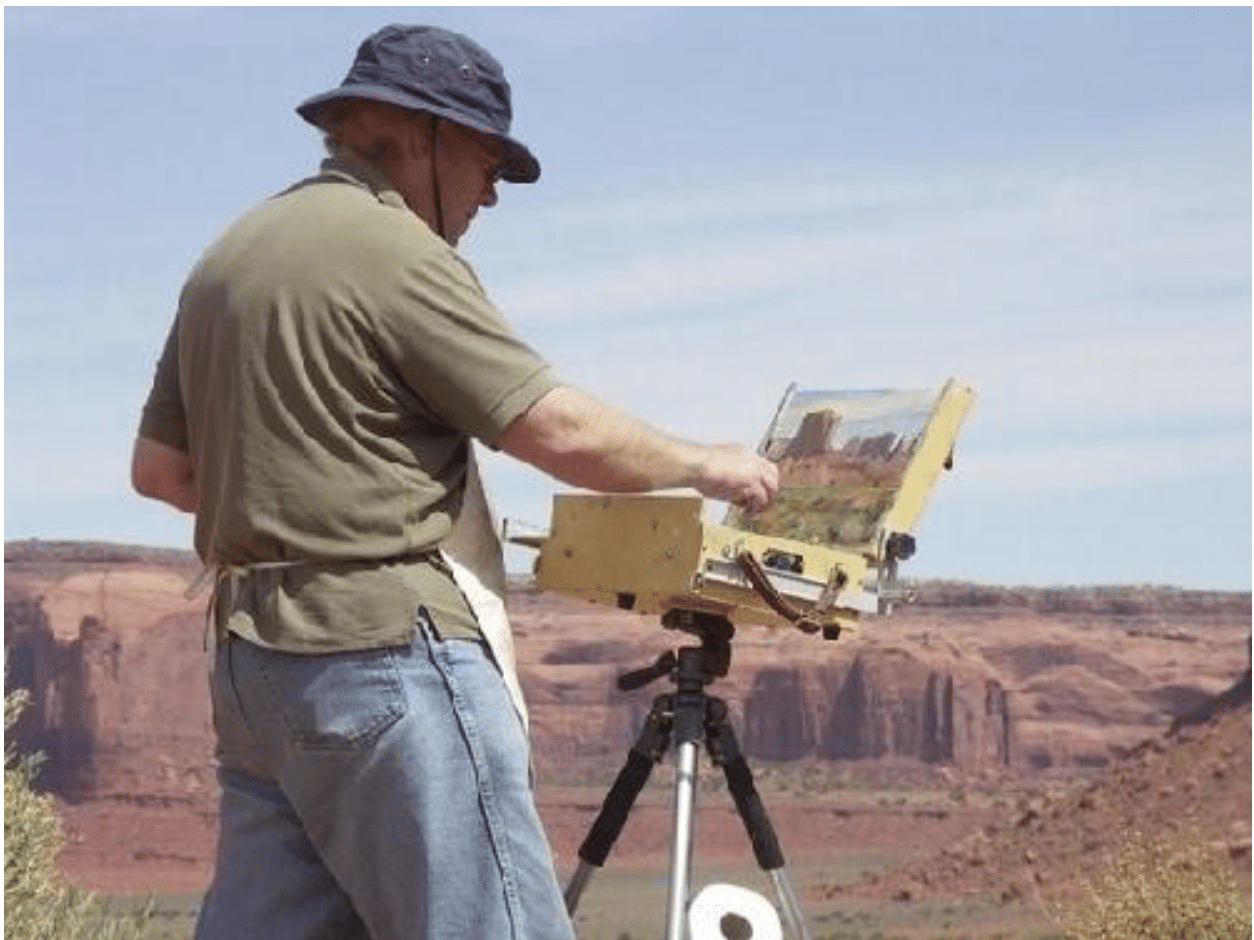
Tim Deibler at work
Born and raised in Oklahoma, Deibler’s passion for landscapes, mountains in particular began after seeing the 1956 movie The Mountain as a young boy. His aspiration to be a landscape painter started at age 13 after receiving a copy of the 19th-century mountain climber Edward Whympers’ book Scrambles Amongst the Alps. When opportunity allowed, Deibler moved his family to southern Colorado in 1999 where the mountains became his constant inspiration.
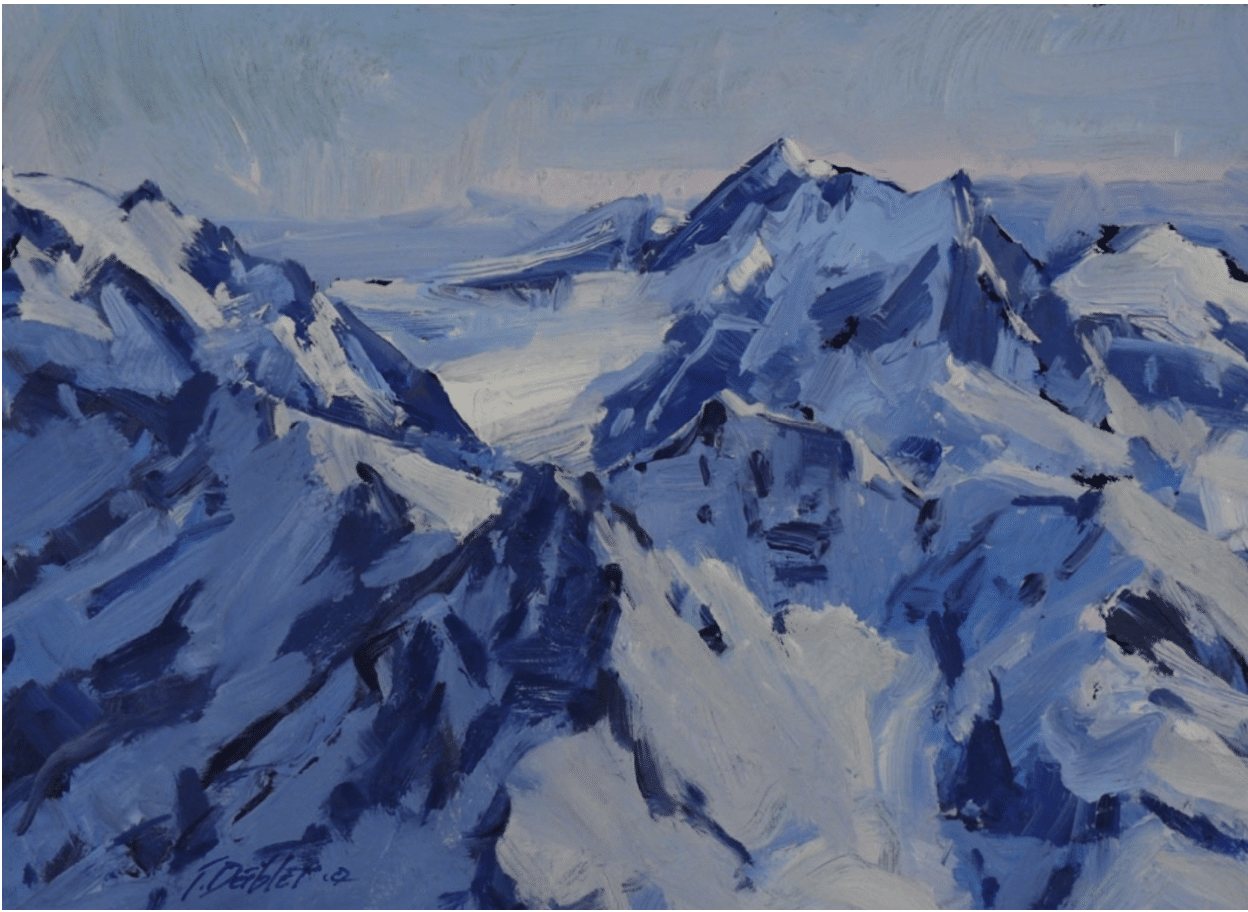
Tim Deibler, Among the Glaciers, oil, 9” x 12’
In a painting such as that above, it’s the lights and shadows that give dimension to the mountains and the lines of shadow, mostly, that lead the eye. BUT! The diagram below shows the movements and counter-movements created by Tim’s brushstrokes alone – the green lines roughly trace only the trajectories of the visible brushstrokes, not the linear composition. And it’s lively indeed! This is a strong example of what’s known as an activated surface.
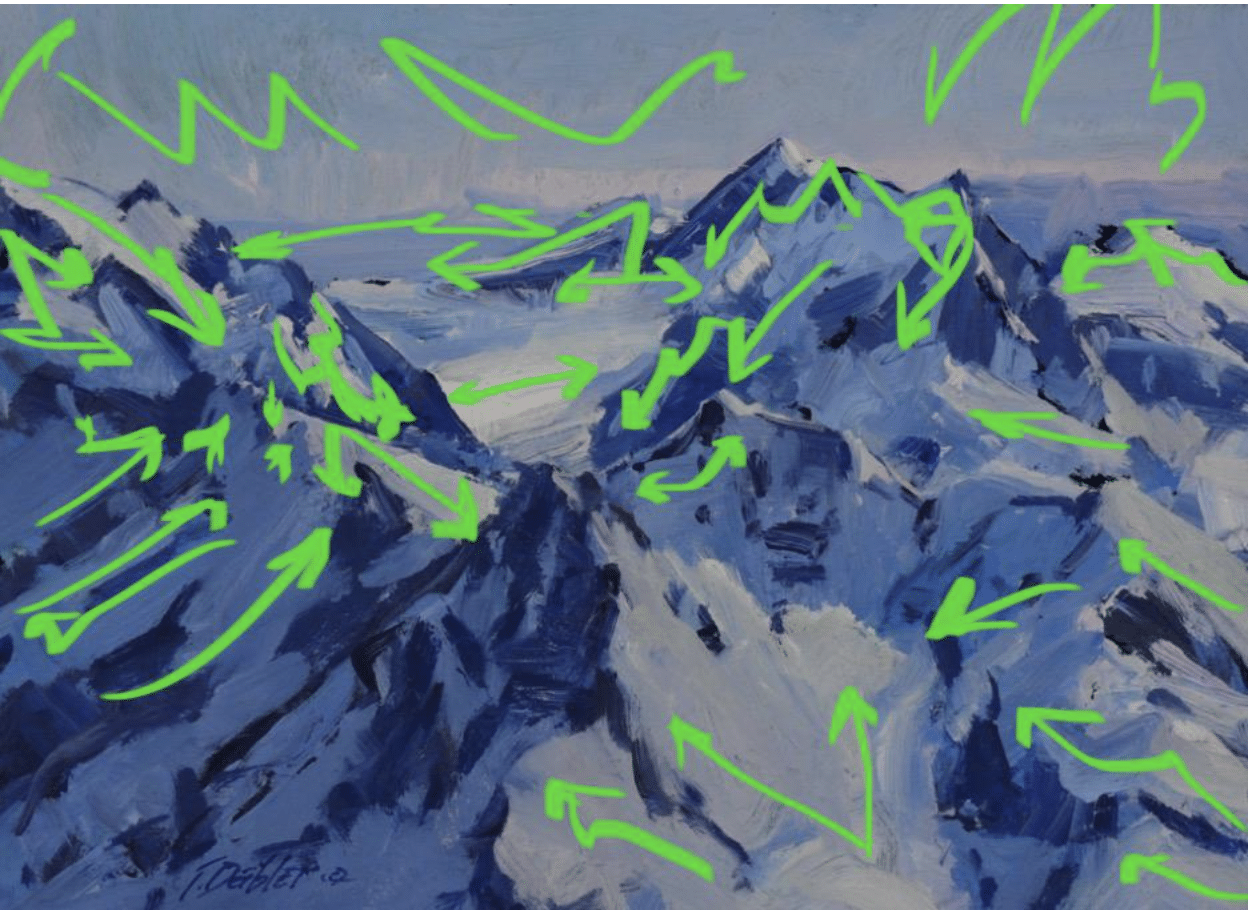
Directional Brushstrokes: This diagram shows just the paint handling as an independent overlay placed on top of what it’s a painting of (the mountains). Tim Deibler’s brushstrokes (green highlights) direct the eye in multiple directions, forming an intricate counterpoint with the directional lines of the mountains themselves.
Deibler’s sharp eye and rapid brushwork not only impart a fresh and spontaneous feeling of motion and energy. His ability to work quickly makes it possible for him to make several paintings at the same site on the same day, capturing the changing light all the way from morning to nightfall, should he choose, in a small series of compact plein air paintings.
He has a video in which he does just that, creating three paintings in a single mountainous locale as the light changes throughout the days.
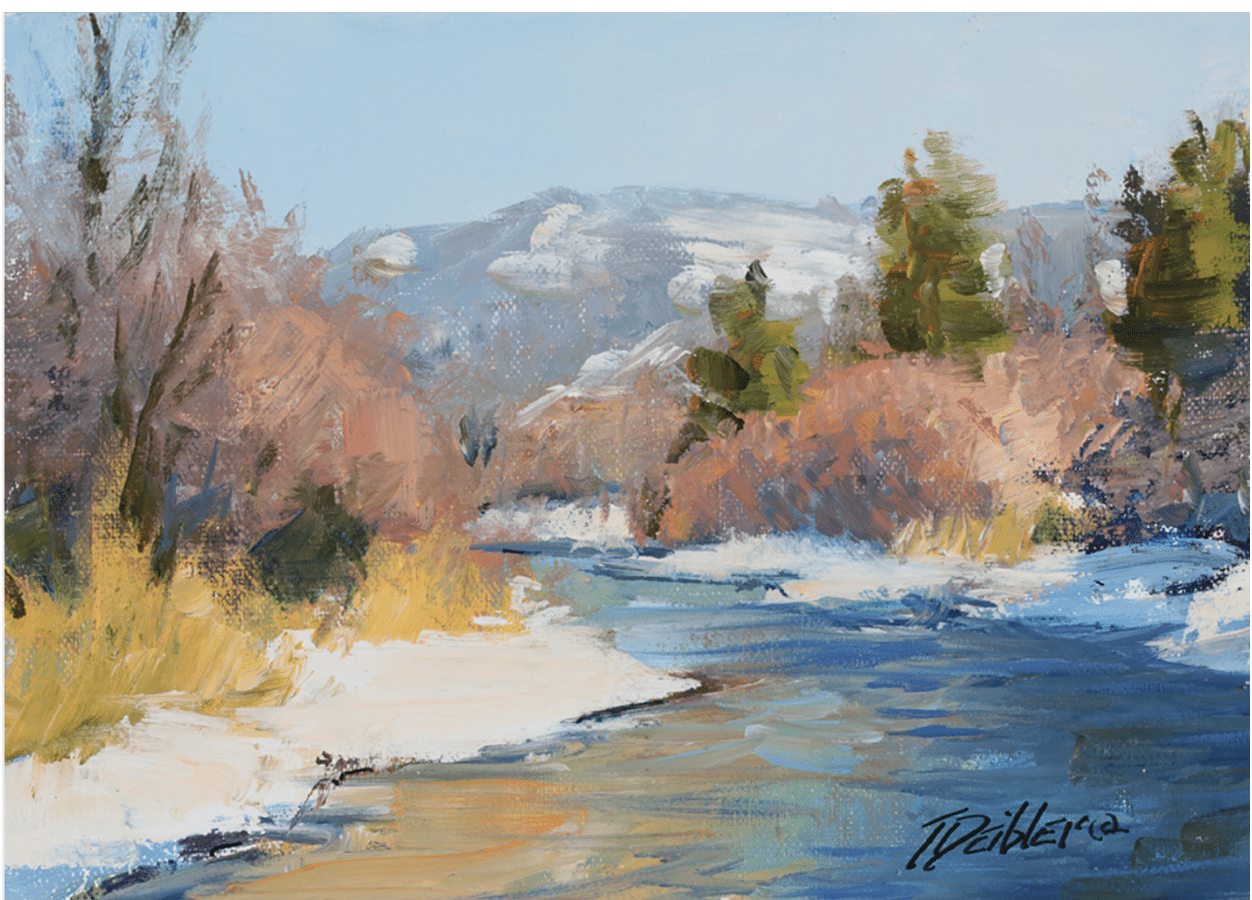
Tim Deibler, landscape study, oil, 5 x 7 in.
For more on plein air techniques, check out the free newsletter, “Outdoor Painter,” published by the same folks who bring you the very popular print publication PleinAir™ Magazine. To sign up, click here.
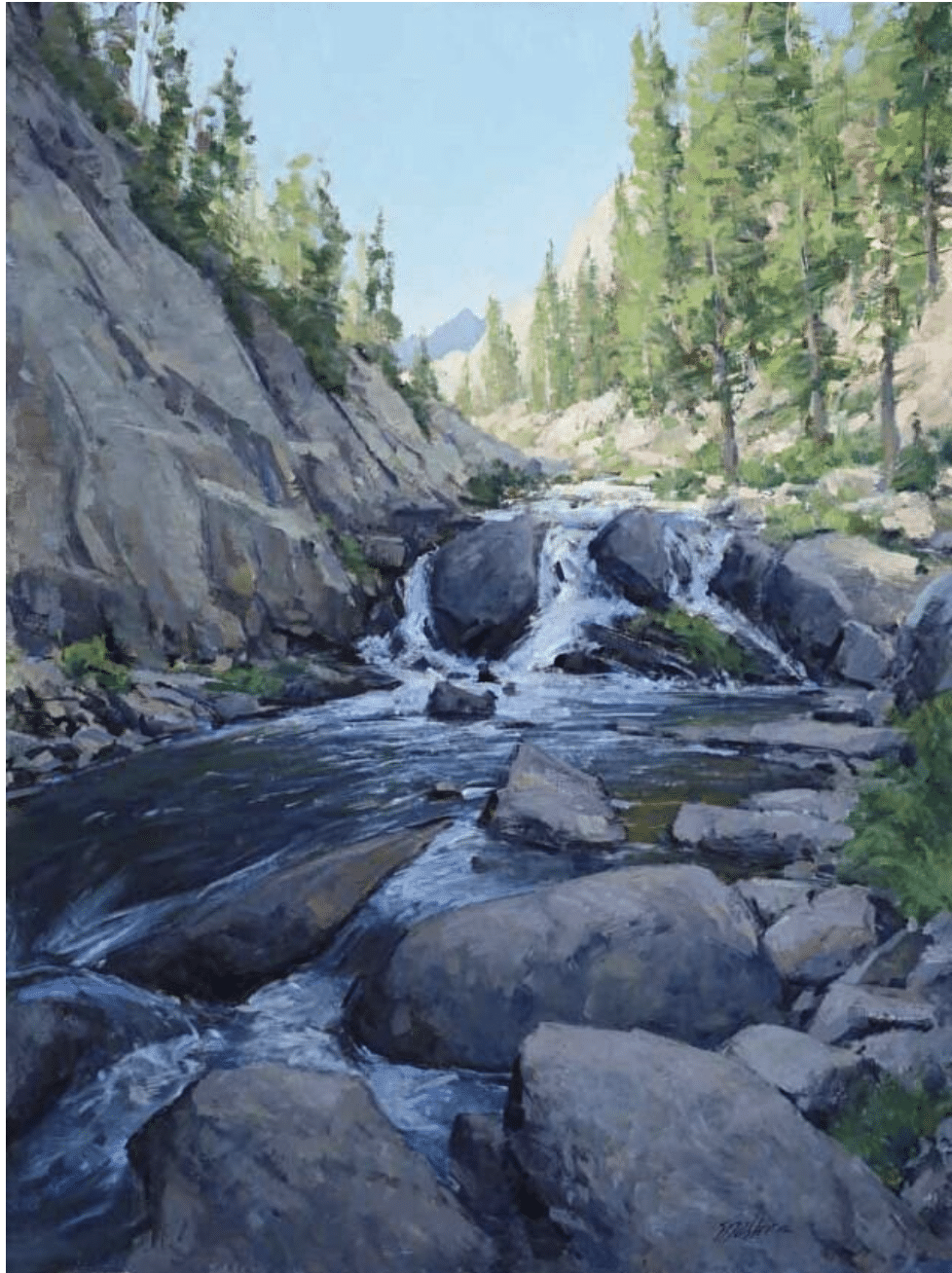
Tim Deibler, “Soothing Melodies,” oil, 24 x 16 inches.