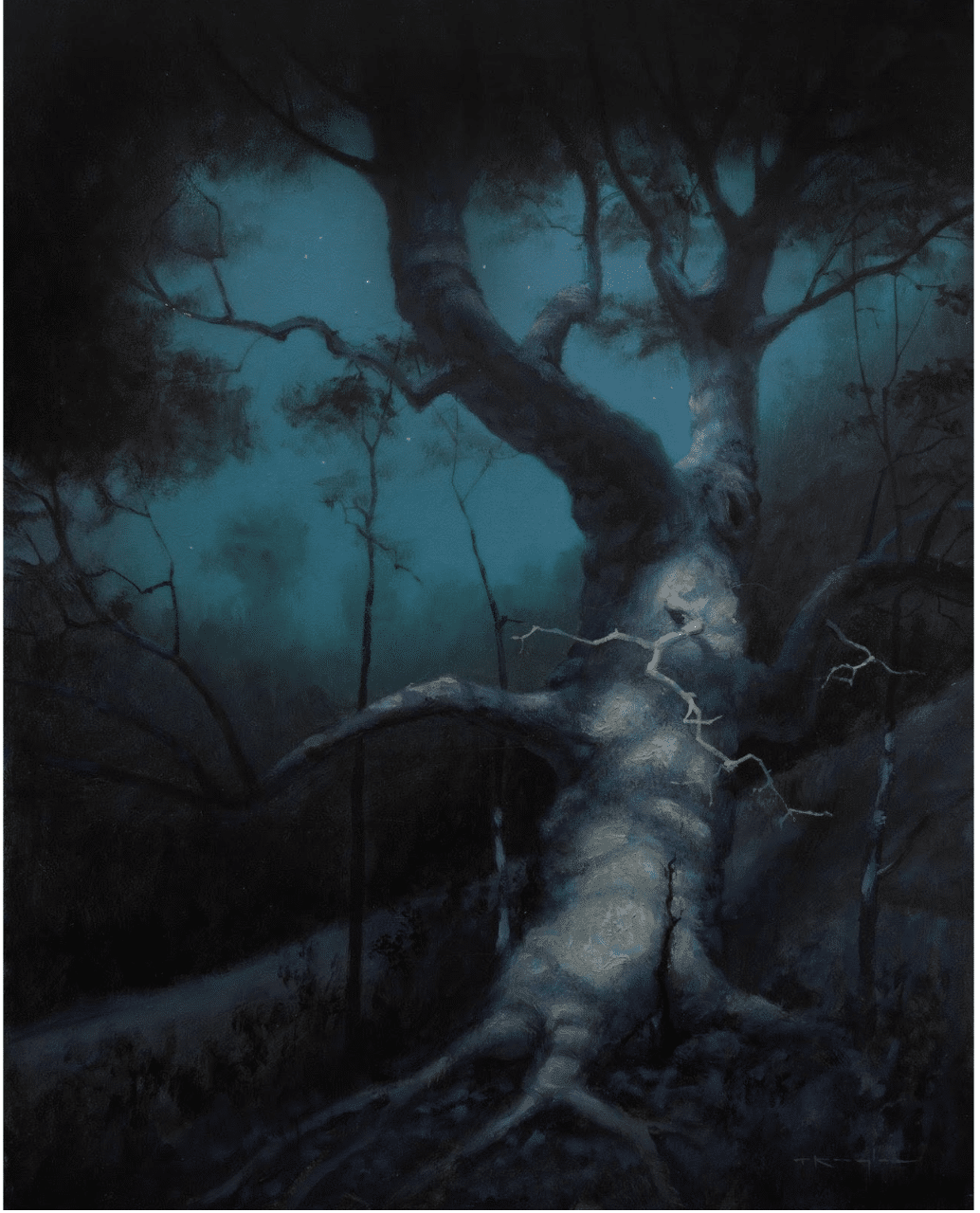
The winners in the monthly PleinAir Salon have been announced. Taking the top spot is Thomas Kegler’s nocturne, “Mid-Summer Night, Romans 5:4,” The Biblical reference, paraphrasing, says: “Perseverance produces character, and character produces hope.” Come to think of it, that’s not a bad thought to keep in mind when entering one’s work in the monthly art competition!
This month’s Salon judge was gallerist David Etheridge, director of Gallery 1261< https://gallery1261.com > in Denver. Located two blocks from the Denver Art Museum, Gallery 1261 has a mission to celebrate artistic expression without the restrictions of traditional marketability. Abend Gallery also shares the space.
First Place Overall
Thomas Kegler
“Mid-Summer Night, Romans 5:4”
Oil, 20×16 in.
$600 Cash Prize
“I chose Thomas Kegler’s ‘Mid-Summer Night, Romans 5:4’ for first place due to its captivating portrayal of a tree at night,” said the judge. “The masterful use of light and shadow creates a compelling mood, imbuing the scene with a narrative quality that invites repeated viewing.”
(image at top of page)
Second Place Overall
Natalie Hirschman
“Deep Forest”
Oil, 36×47 in
$400 Cash Prize
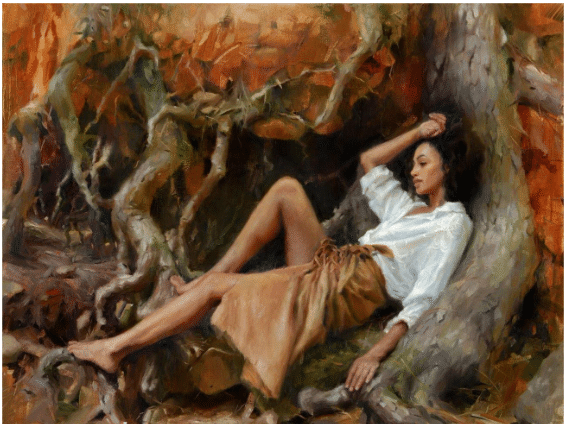
Second Place Overall: Natalie Hirschman, “Deep Forest,” Oil, 36×47 in.
Says the judge: “I selected Natalie Hirschman’s ‘Deep Forest’ for second place due to its compelling composition and rich color palette. The harmonious integration of the figure within the intricate natural forms creates a captivating visual narrative, showcasing the artist’s skill in balancing figurative and natural elements.”
Third Place Overall
Stephanie Mills
“Winter Stillness”
Oil, 12×243 in.
$200 Cash Prize
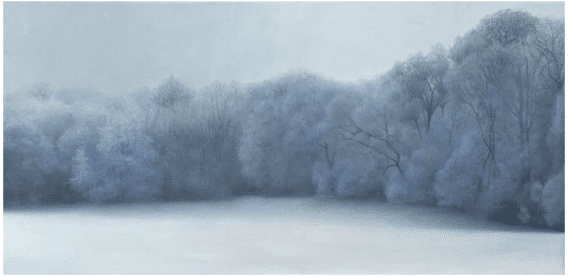
Third Place Overall: Stephanie Mills, “Winter Stillness,” Oil, 12×243 in.
“I selected Stephanie Mill’s winter landscape for third place due to its captivating atmosphere. The artist’s masterful use of a limited palette beautifully evokes the serene essence of a frost-laden scene.”
For artists considering entering their work, David advises: “Image quality is crucial. High-resolution, sharp images are essential for showcasing your artwork effectively. Blurry or low-quality images often get overlooked, regardless of the artwork’s merit, simply because judges can’t properly evaluate what they can’t clearly see. Invest time in capturing professional-grade photographs of your work – it can make the difference between being considered for an award or not.”
View the winners and honorable mentions in all the categories here. All Category Winners receive a $50 Cash Prize – view them all here.
These artists will be featured in the upcoming issue of PleinAir™ Magazine and the digital issue of Fine Art Connoisseur.
The monthly PleinAir Salon rewards artists with over $50,000 in cash prizes and exposure of their work. A winning painting, chosen annually from the monthly winners, is featured on the cover of PleinAir magazine. The Salon is sponsored by PleinAir™ Magazine but open to all painting styles and mediums.
The deadline is ongoing, so visit PleinAirSalon.com now to learn more.
Botticelli: Two Madonnas at Chambord

Domaine national de Chambord
20 October 2024 to 19 January 2025
An unexpected treasure in the church of Saint Félix in Champigny-en- Beauce, the Virgin Mary, Infant Christ, and the young St. John the Baptist, initially dated as being 19th century, has recently been authenticated as an original 16th century piece from the studio of Italian painter Sandro Botticelli (1445-1510). It will be presented in the Chapel at Chambord from 20 October 2024 to 19 January 2025 alongside its model conserved in the Pitti Palace in Florence, exceptionally on loan from the Uffizi Gallery.
Virgin and Child with the Young St John the Baptist, Sandro Botticelli. C. 1490-1495, oil on canvas, 134 x 92 cm, © SCALA, Florence – Courtesy of the Ministero Beni e Att. Culturali e del Turismo Botticelli’s original painting, displayed in the Palatine Gallery at the Uffizi Galleries in Florence, seems to have been made fifteen years before the one conserved in the church of Saint Félix at Champigny-en-Beauce, in the Loir-et-Cher department. This work long went unnoticed as it was thought to be a 19th century copy. Curator Matteo Gianeselli was the first to draw attention to the painting at Champigny-en-Beauce during his research into Italian paintings conserved in French public collections. He identified the piece as an original 16th century work made in Botticelli’s studio in Florence.

Virgin Mary, Infant Christ, and the young St. John the Baptist, studio of Sandro Botticelli. C. 1510, oil on canvas, 178 x 135 cm, Champigny-en-Beauce © Tony Querrec – GrandPalaisRmn
Restoration work was coordinated by the DRAC Centre-Val de Loire and carried out in workshops at the Centre de Recherche et de Restauration des Musées de France (C2RMF). In 2021-2022, the Musée Jacquemart-André presented the work in an exhibition titled Botticelli Artist and Designer, alongside the prototype from Florence. Matteo Gianeselli’s intuition was confirmed both by critical examination from art historians and scientific analyses made by the C2RMF under Director Dominique Martos-Levif. Attributing the piece to the Botticelli studio also allowed the painting to be classified under the Historic Monuments regime as the property of the commune of Champigny-en-Beauce.
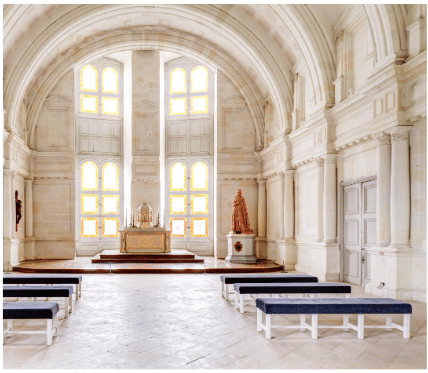
Domaine national de Chambord, Chapel © Sophie Lloyd
Another version of the Virgin Mary, Infant Christ, and St. John the Baptist was made in the Botticelli studio around 1500. It now belongs to the Barber Institute of Fine Arts in Birmingham, UK.
Similar but different, the two paintings displayed in the chapel of the château at Chambord demonstrate developments in painting technique as well as the functioning of Botticelli’s studio and the extent to which artists in Florence created multiple representations of the Holy Family. The painting from Champigny is very close to the one in Florence, though the composition is reversed, no doubt on account of the duplication technique used, and shows background variation (outside with rose bush, inside with shadow).
Bringing these two paintings together reflects the influences of Italian artists in the Loire Valley, including Leonardo da Vinci whose work inspired the architecture at Chambord and its famous double-helix stairway.