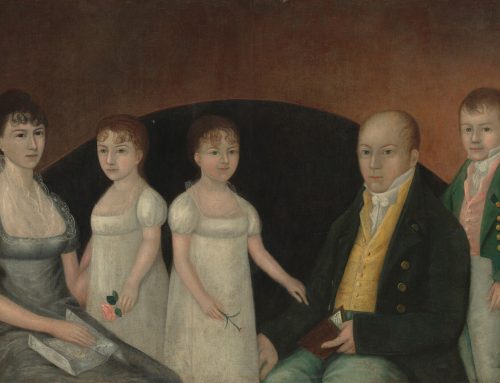

They say there isn’t a major museum in the world that doesn’t own counterfeit works, some even misattributed to very famous artists (e.g. by a recent count, 20% of all art in museums in the UK is fake). Thinking about it makes visitors and institutions alike uneasy: What’s real and what isn’t?
Amsterdam’s Van Gogh Museum recently broke a 50-year silence and identified three “Van Goghs” in private collections as forgeries, including a painting of a peasant woman that the museum previously authenticated prior to its auction by Christie’s for nearly $1million 2011, according to Van Gogh expert Martin Bailey.
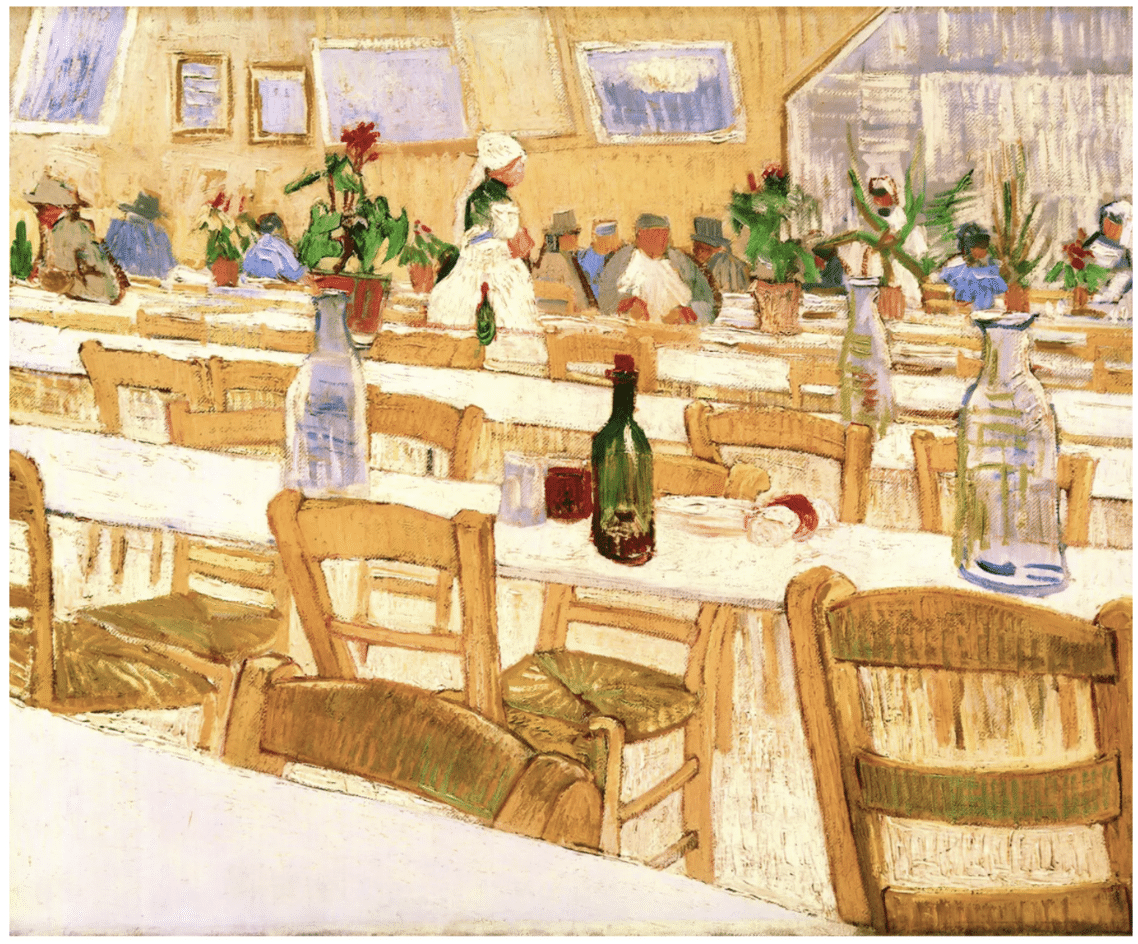
The image above, and not the one at the top of the page, is the authentic Van Gogh. Incredibly, the forger of the supposed “second version” of the restaurant interior painting was working from a black and white photo. That meant the counterfeiter had to guess the colors of the flowers and incorrectly decided to make them sunflowers, which would not have been in season then (late fall), instead of autumn begonias, the proper flowers blooming at the time Van Gogh painted the original “version.”
Except for that detail (and the fact that chemical analysis proved that the counterfeit’s paint was a type not patented until 1935), it would be much harder to determine, especially if you had no reason to suspect any underhanded hustling. Hence the vulnerability of museum collections.
While the percentages remain difficult to establish and verify, American art historian Noah Charney, author of various articles and fictions on art counterfeiting, says that probably 95% of the paintings on display in major institutions are authentic.
Then again, a French museum devoted to landscape painter Étienne Terrus (1857-1922) revealed in 2018 that more than half of its collection consisted of counterfeits. Out of 142 pieces, 82 were discovered to be forgeries, meaning the museum – its patrons and benefactors as well – had been swindled out of hundreds of thousands of dollars.
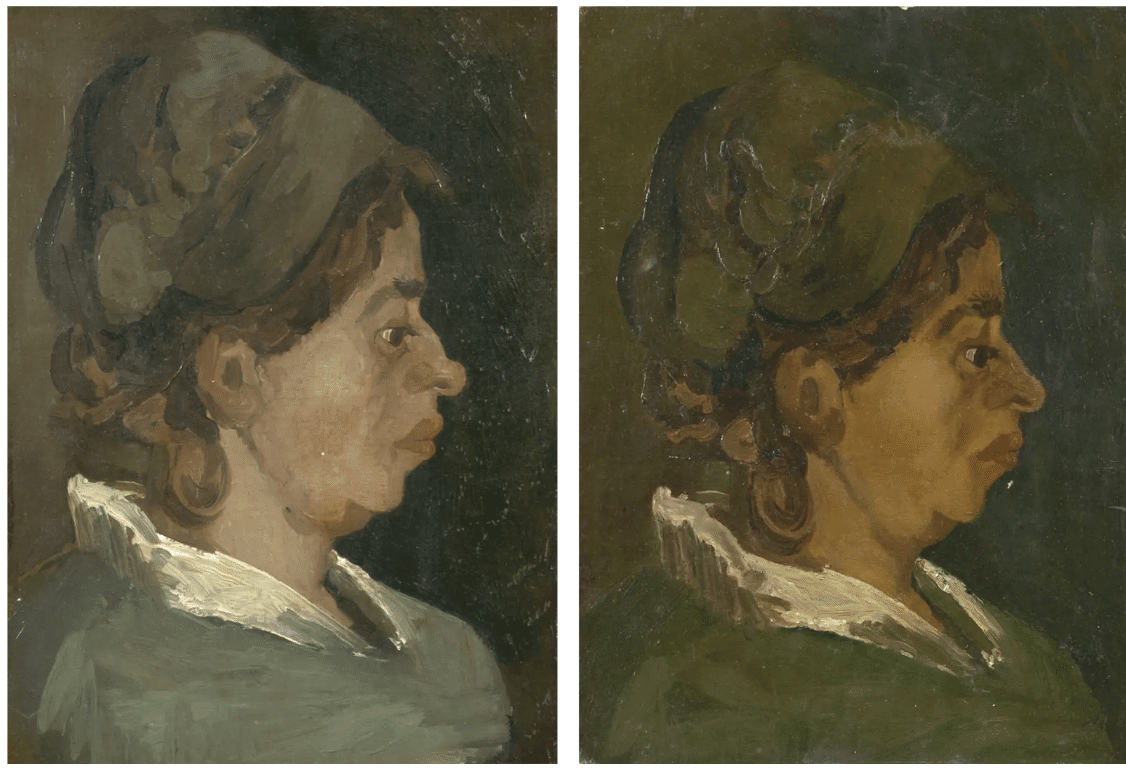
Which of these two portraits is by Van Gogh and which is fake?
The real “Head of a Woman with a green Bonnet” (c. 1884) is on the left. “Head of a Woman” (c. 1905), on the right, is a forgery.
Even the Palace of Versailles fell prey to fraud when it purchased several million euros worth of phony period furniture in the mid-2010s. Museums, like the van Gogh museum, many of which have historically been reluctant to openly address the issue of forgeries in their collections, are beginning to do so with greater transparency. This will not be the last time a major museum announces that hitherto “masterpieces” by world-renowned artists are nothing of the kind.

A suite of four Louis XVI gilt-walnut armchairs stamped by Louis Delanois that sold at Christie’s Paris in 2015.
Fancy making a “Van Gogh” of your own? Learn how to paint like Van Gogh in this step by step video by Dana Peterson: Portraits Van Gogh Style.
Vote Here!
Acrylic painter Charlie Easton is coming to the Streamline Studios to shoot a painting demonstration and YOU get to help choose which painting he’ll demo and what you want to know about it.

Choose a painting and let us know what you want to learn how to do! Streamline’s video folks will pool the answers and use them to help guide Charlie’s lesson plans.
CLICK HERE (or on the image above) TO TAKE PART IN THE POLL