Elaine Daily-Birnbaum is a mixed media painter. Her abstract work is deeply personal and very much process centered. She is a member of the National Watercolor Society and the American Watercolor Society. We asked her about her work and what draws her to abstraction. This is part 2 of our interview with Elaine.
How do you create a framework for where you go in abstract painting? In non-representational painting, there are just so many paths you could take at every step. How do you create direction for a piece? Or do you? Why (or why not)?
It’s true, there are unlimited paths to be taken in any painting. But, in the end, we, as people and as artists, are defined by the decisions we make. And the reasons for any particular decision are unique and depend on our particular wiring as well as our experiences.
During the initial part of the painting process, I allow myself to wander and experiment, letting my intuition guide me. Only after I have fairly firmly established the direction I want, do I stand back and begin assessing the piece in terms of composition and design.
However, to initially paint freely and intuitively, I find I have to quiet that ever-present critic in my mind. I do this by listening to audiobooks or Tedtalks while painting. When I am ready to critically evaluate the piece, I stop listening and go through a mental checklist of the principles and elements of composition and design.
Outside of finished pieces, how do you practice and do thinking around your art? Do you keep sketchbooks or do drawing? What and why do you do this other work? How does it fuel your practice and improve your work?
I do have several sketchbooks, but you might be surprised to find more words or thoughts, or even potential color combinations than actual sketches. I have made some sketches, but I have never realized them in a completed painting. I may start out to do just that, but somewhere along the way, I am taken another more interesting direction.
I do a lot of art viewing, both in the printed format and in galleries and museums. I study works of art that I like and try to determine what it is that makes them special, why I am responding favorably, and what is the quality of the piece.
From a color standpoint, what have you decided ahead of time? Do you begin a piece with a color scheme in mind? What then, color-wise, do you allow to evolve while painting?
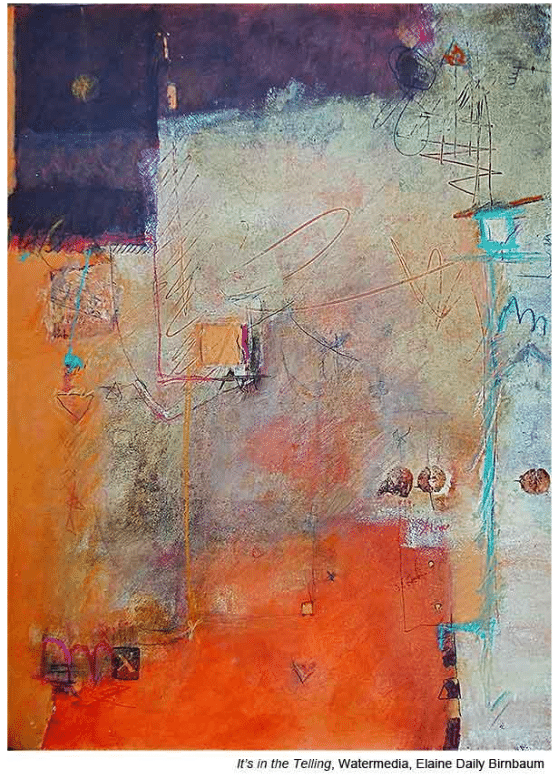
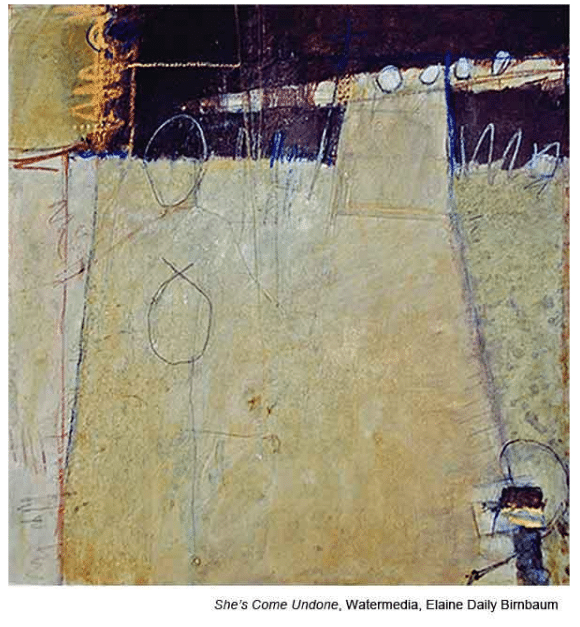
I may or may not make a color decision prior to starting a painting. For the most part, though, I am not a colorist, often preferring a more neutral palette. However, I may start out with a warm (red or orange) undercoating before applying more neutral colors.
For some time I have been trying, with limited success, to create an all-white painting. I am also not very comfortable working with reds….. it kind of scares me. However, every now and then I set up a color challenge for me, such as creating an all-white or primarily red painting…. just to push my creativity process in a less comfortable way. It definitely keeps me humble!
What kind of mood are you trying to evoke through your work? What about the colors you choose help you do that? How do different kinds of colors (and color relationships) change the mood of a piece?
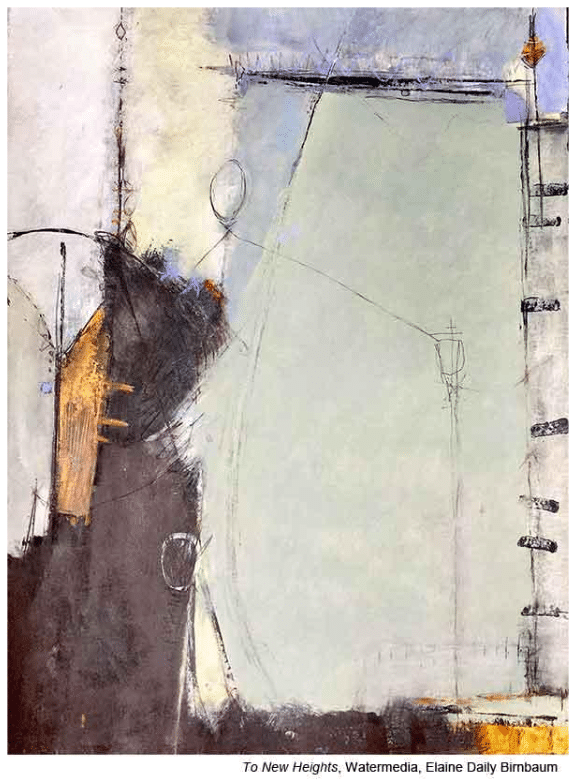
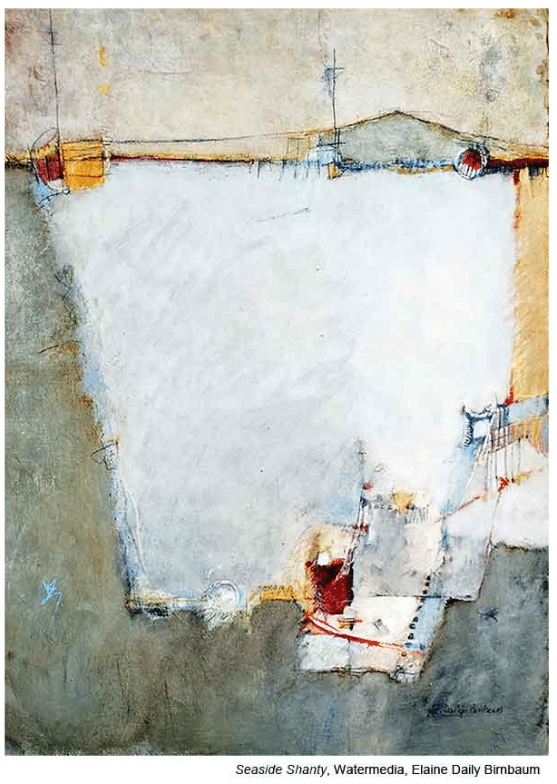
Viewers often comment on the feelings of mystery, depth, and serenity in my paintings. I’m comfortable with that. This is most likely a response to the neutral palette I use, the many layers of paint I apply, and my use of large negative space that includes elements of interest such as texture and linework. I share Francis Bacon’s opinion that “The job of an artist is always to deepen the mystery.”
Design can feel like this huge and intangible concept. Where and how does an artist begin learning design?
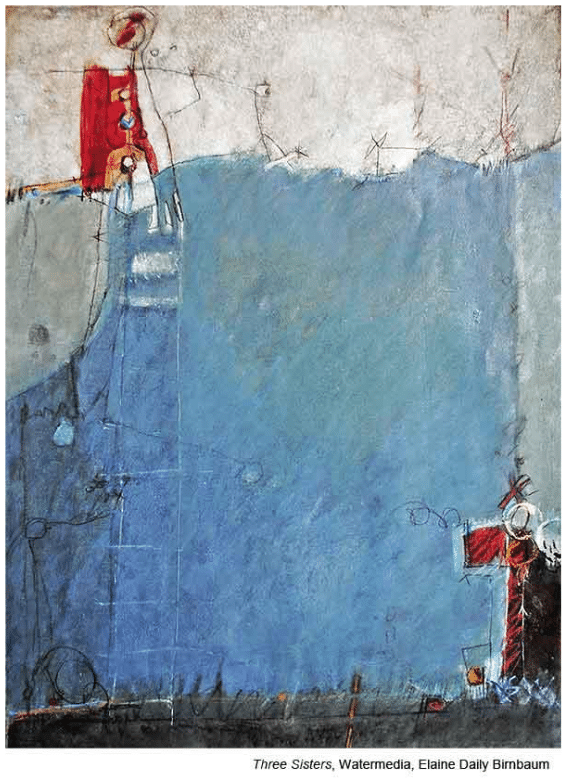
The most effective way to begin to learn design is to read about it in many publications, and then study and evaluate paintings solely in terms of design. Make a checklist, if necessary. Initially, its best to do this with paintings that you, personally, like. Later, it’s helpful to evaluate the design elements that are lacking in those paintings that you don’t particularly like.
What are the most important elements and principles of design for you in your work? Why? How do you use them? (Please feel free to talk about a particular painting and send that along with the images if that would make this easier.)
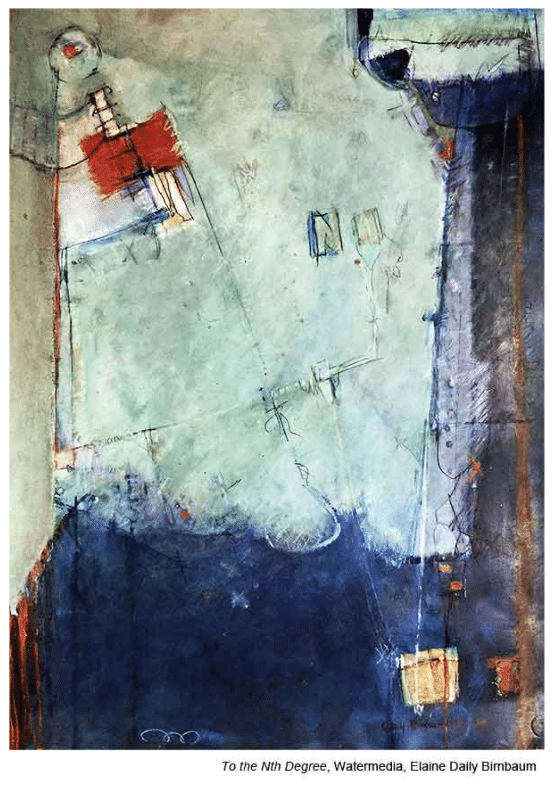
I am, basically, a shape- and mark-maker. These are the primary design tools I use in my creative process and the ones that contribute much to my emotional response to a painting. Most of my paintings do contain a large negative space……. a component I have long been drawn to since my early days of studying the art of Nathan Oliveira and Richard Diebenkorn. That space is almost sacred to me, seemingly providing a place of rest, yet containing subtle elements of contrast, value, line, and texture when viewed more closely. In other words, a bit of a dichotomy.
For someone who wants to learn how to paint abstractly, where do they start? What foundation skills would you suggest they work on?
One typically doesn’t start out to an abstract painter…… it is an evolution. Nor is abstract art, like any other visual art, part of a hierarchy. However, for those interested in abstract painting, possessing a firm grasp of compositional elements and design principles is absolutely essential. That becomes the roadmap to a successful outcome.
Equally important, in my opinion, is understanding why one wants to paint abstractly. What about that creative process is compelling? What story or idea do you want to express?
In addition, I would like to emphasize the mental and emotional demands of reaching deep within one’s consciousness to create a compelling image or depiction relying on shapes and color. All this, WHILE giving up some element of control and allowing the painting process to evolve. This freedom is something I struggle with, at least to some degree, in almost every one of my paintings. It is a little bit scary. But it is also the part that is the most exciting and rewarding. And did I mention CHALLENGING?
Ready to dive into water media? Check out “Innovative Water Media,” the high-quality teaching video by Nicholas Simmons that will immerse you in the techniques and tools of the trade.