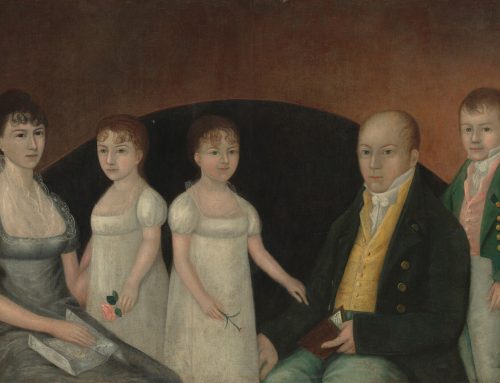
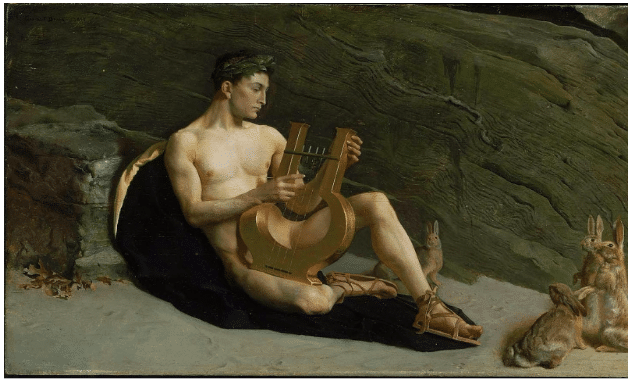
The tale of Orpheus and Eurydice ranks among the most often depicted Greek myths in Western art. It’s the ultimate tragic love story, but perhaps the Orpheus and Eurydice myth appeals to the artistic imagination especially, since the protagonist (Orpheus) is an artist, and one can read in his story an allegory of the joys and sorrows of the creative life.
Orpheus was reputed to be the son of the god of music, Apollo, and one of the nine Muses (some say Calliope), gifted with exceptional musical talent. Ovid says that his singing was so enchanting that wild animals and even stones and trees drew close to listen.
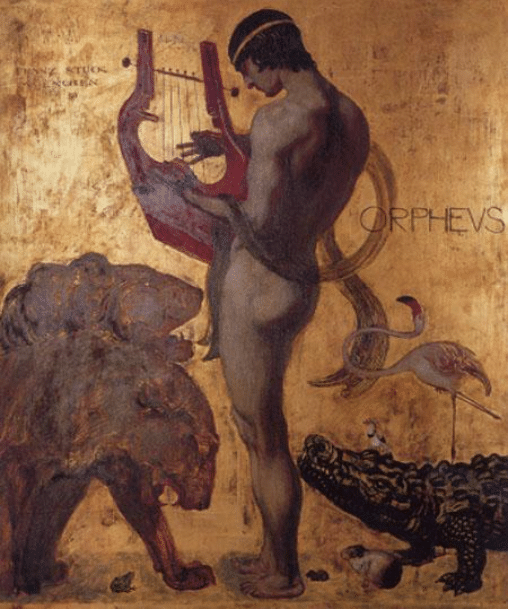
Orpheus by Franz Von Stuck, 1891. Orpheus charms wild beasts with his songs.
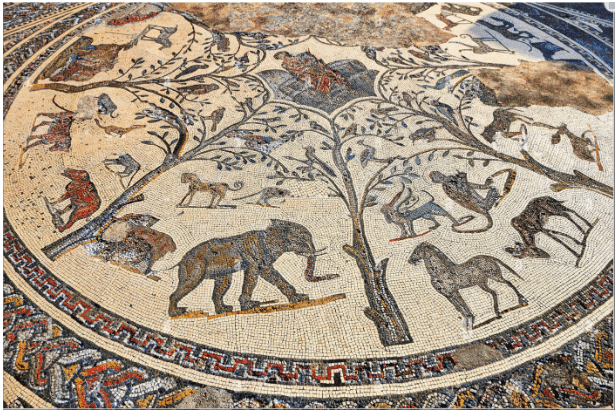
Roman floor mosaic depicting Orpheus as mystic, at the center of nature itself, charming all manner of beasts and trees.
Orpheus and the nymph Eurydice fell in love, but there’s little agreement on just what happened next. Most believe that shortly after their marriage (maybe even the same day), Eurydice was bitten in the heel by a poisonous snake and died. They say Orpheus lamented in song so mournfully and beautifully that the nymphs practically begged him to journey to the Underworld retrieve her.
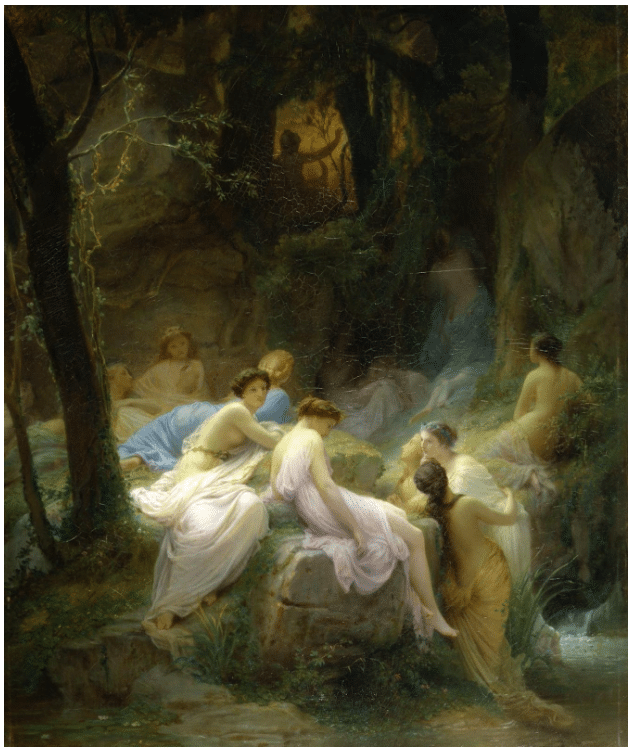
Nymphs Listening to the Songs of Orpheus, by Charles Jalabert, 1853. Henry Walters Museum, Baltimore. MD.
Appealing to the gods, Orpheus was told that Hermes (Mercury) would guide him there and back.
In the Underworld, Orpheus subdued the monstrous three-headed guardian dog Cerberus with his music, and even softened the heart of Hades, King of the Underworld.
“As Orpheus pleaded his cause, enhancing his words with music,
He moved the bloodless spirits to tears.”
- Ovid
Orpheus was allowed to return with Eurydice under the condition that he walk in front of her and not turn to look at her until both had reached the sunlit land of the living.
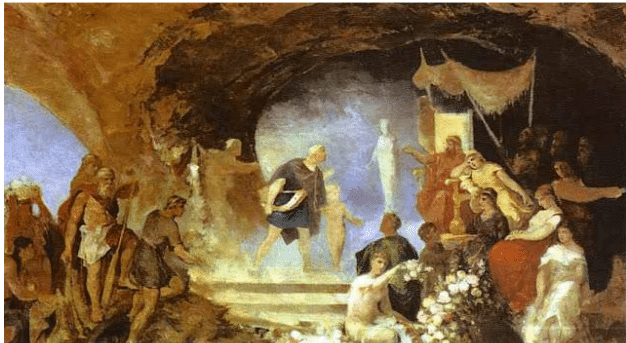
Orpheus in the Underworld by Henryk Hector Siemiradzki, 1880-90.
Slowly they made their way through the Underworld growing ever closer to the exit, but Orpheus grew afraid that Eurydice was falling behind. Her steps were so silent (she was still a “shade” or ghost of herself) that he began to doubt she was even there, suspecting Hades had deceived him.
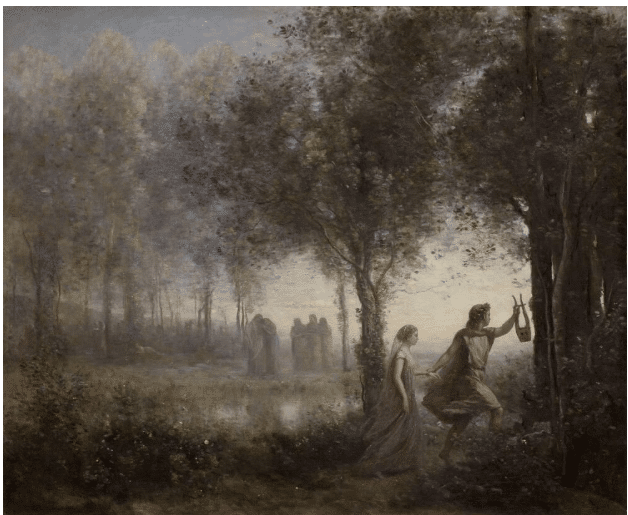
Orpheus Leading Eurydice from the Underworld, Jean-Baptiste-Camille Corot, 1861.
Doubt kept preying on Orpheus’s mind until, just as they reached the daylight, he turned around, and because Eurydice had not yet crossed the threshold, she immediately sank back into the Underworld.
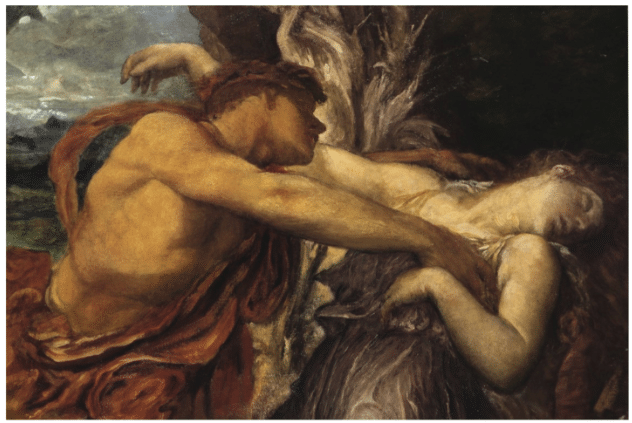
Orpheus loses Eurydice, by George Frederic Watts
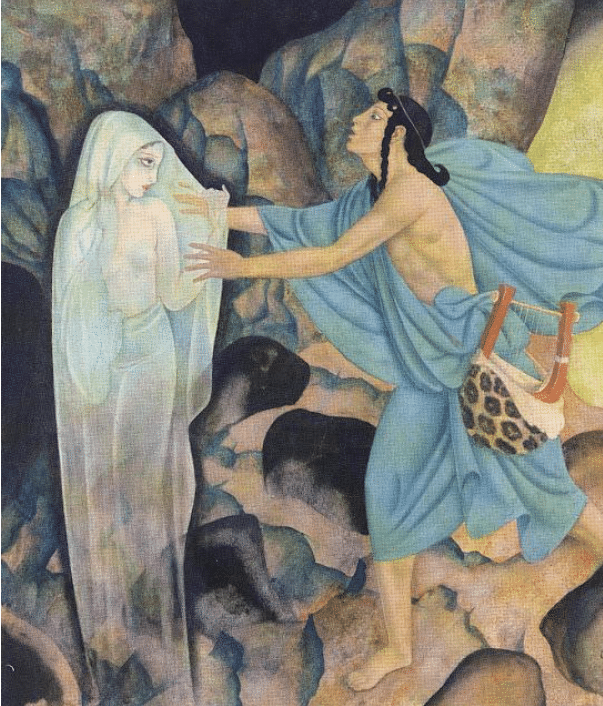
Orpheus and Eurydice by Edmund Dulac. “at once she sank back into the dark” – Ovid
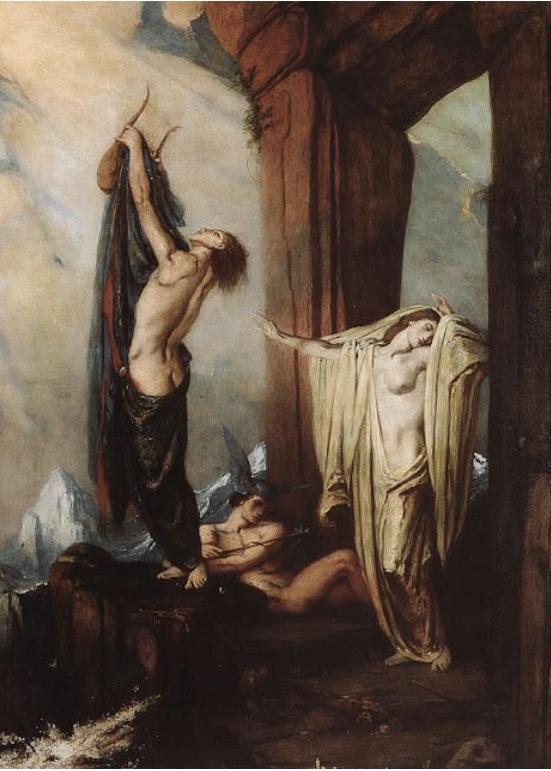
Orpheus and Eurydice by Charles de Sousy Ricketts, c.1922.
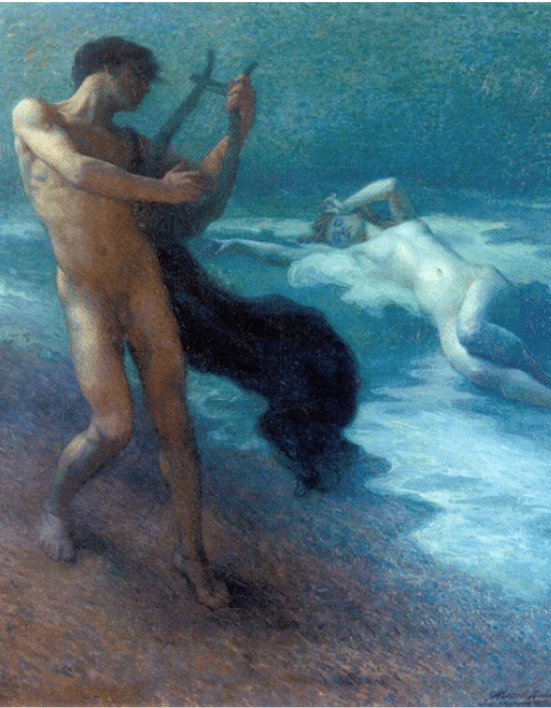
Orpheus conjures dreams of the lost Eurydice with his song, by Michael Putz-Richard, 1868.
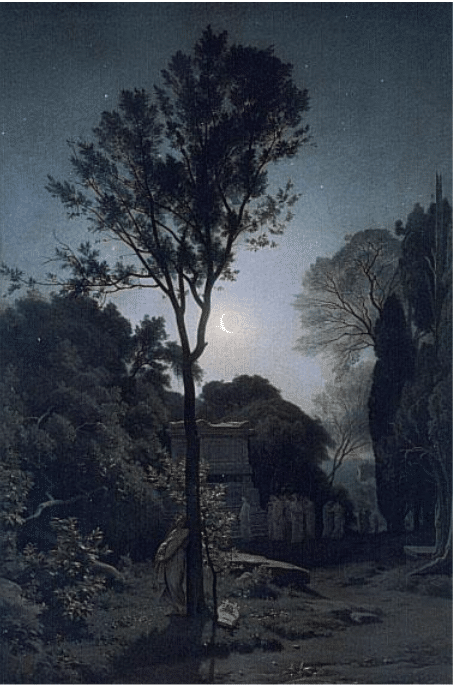
Orpheus by Louis Francais, 1863.
Orpheus never fully recovered from the double loss of Eurydice.
The grieving poet continued to sing his poems, unable to stop mourning the loss of his beloved. Again, accounts differ, but most agree he was torn apart by a band of violent women, likely maenads, followers of Dionysius. However, the Muses gathered up some parts of his body and buried them, and Orpheus’ head and lyre fell into the River Hebros. From there they floated to the island of Lesbos, off the coast of Asia, where nymphs found the head still singing as it went.
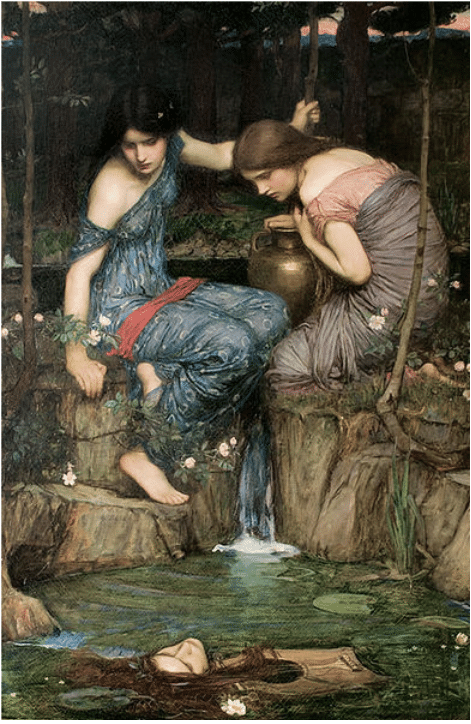
Nymphs Finding the Head of Orpheus by John William Waterhouse
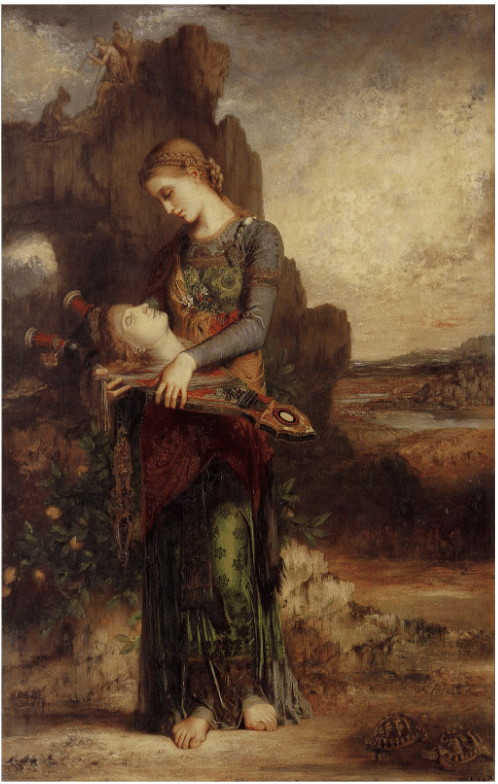
Thracian Girl Carrying the Head of Orpheus on his Lyre by Gustave Moreau (1865). Musee d’Orsay
Some say that upon his death, Orpheus joined Eurydice in the Underworld even as his song kept going, disembodied from the tragic life. So, if there’s a fable for artists and seekers here, perhaps it’s this: The true artist digs deep, journeying to the underworld, charming the monsters waiting there, ultimately accepting that life’s pain is the fire that tempers the soul from which authenticity, wisdom, and the great work springs.
As the semi-mystical German poet Rainer Maria Rilke writes in his great poem sequence, the Sonnets to Orpheus,
No one should ever love their suffering,
but no one ever loves without suffering pain;
and as we die, we come to wondering
if all along there was something we couldn’t quite see—
that winged Thing (Love?) that merges with the Earth’s suffering
to make us what we otherwise would never be.
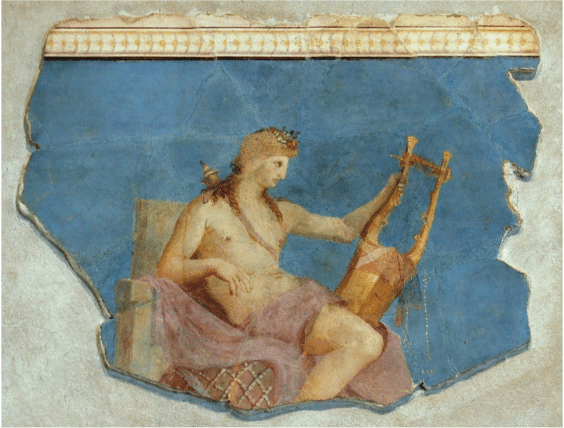
Roman (Augustan, c. 27 BC – 14 AD) fresco showing Apollo with a kithara from the House of the Scalae Caci on the Palatine Hill in Rome.
If all of this art history has you yearning for hands-on learning, by all means check out the amazing range of teaching videos on offer from Streamline here.