Photographs can serve as a valuable source of reference material. However, rarely will a photo capture the essence we felt originally and that we seek to portray on canvas. How do you turn “okay” or even good photos into exceptional paintings that mesmerize viewers? Merely copying the photo won’t do it. So here are three tips:
1. Embrace the Power of Composition: In painting, composition is key, and it can make or break a work of art. You have to impose your own order and edit the image. This is all easily said, but what it comes down to is VERY DIFFICULT: you have to STOP LOOKING AT THE PHOTO during the “design phase” of your painting. Yup, counterintuitive but true. one way to start is by identifying a focal point for the painting – and then mentally arrange everything around it so that the whole composition supports that point. Another, you can analyze the existing composition in terms of where the eye goes when you look at it and what you’d change to take charge and choreograph where the viewer’s eye moves first, second and third. Again, consider how changes in value, arrangement, detail (or non-detail) and proportion could create a more visually engaging piece. Try cropping out and rearranging pieces of the photo in several (not just one!) thumbnail images first.
Sometimes, a simple crop can do wonders. Experiment with different cropping options to eliminate unnecessary elements and zoom in on what’s most important (have you asked yourself what’s most important yet?). You have the power – maybe even the obligation! – to rearrange, omit, or emphasize elements to strengthen the overall impact of the painting. The painting itself matters more than what or where it’s a painting of.
2. Harness the Power of Color: One of the great advantages of working with paints is the freedom to manipulate color. Use this to your advantage when tackling a lackluster photograph. Explore the possibilities of altering colors to breathe life into the image. Analyze the existing colors and ask yourself if they truly convey the mood or atmosphere you envision for your painting. If what you’re mixing isn’t working for you, stop! If it’s an oil, scrape out some sections and repaint them with warmer or cooler, brighter or darker, simpler or more complex color mixtures. Again, you aren’t obligated to reproduce the photo! Trust your creative self instead.
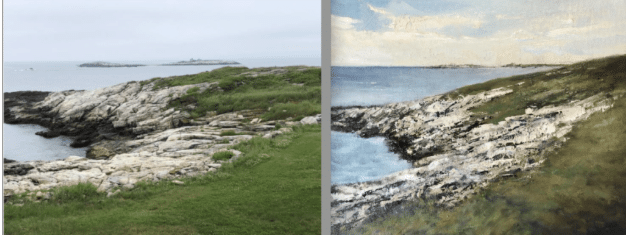
Even though the photo on the left was a decent one, the artist here made numerous changes, both obvious and subtle, to create the more dynamic (and textural!), less flat-feeling painting on the right. The editorializing largely has to do with temperature (what’s all cool in the photo gets areas of warmth in the painting) and tilting the picture plane toward the viewer – see in the grass in the lower right corner – while tilting it away in the upper right. These corner areas have also been darkened with shadows the artist has invented to discourage viewers from wandering too far away from the main event – the rocky shore at the center of the composition (an example of “the painting itself mattering more than copying what it’s a painting of.”
Consider that different color intensities and different color temperatures evoke their own specific emotions. But the only way to explore this is to resist the urge (which will dog you at every turn!) to copy the photo.
3. Emphasize Texture and Brushwork: Take advantage of IRL artwork’s tactile qualities to draw viewers close. Experiment with paint handling – different kinds of brushes or the palette knife – introduce texture and convey it through your strokes, edges, and the overall surface.
Consider experimenting with different brush sizes and strokes to add dimension and depth. Use a huge brush at the outset to keep yourself from being a slave to detail. By layering paint and employing various techniques such as impasto or glazing, you can create a richly textured surface that invites viewers to explore your artwork with their eyes and hands.
Transforming a mediocre photo into a remarkable painting requires a combination of artistic intuition, technical skill, and a willingness to explore new possibilities. Harness the power of composition, color, and texture to free yourself from having to “get it right” – allow your artistic vision to take the lead.
Remember, as an artist, you have the power to transcend the limitations of a photograph and create a visually captivating masterpiece that stands on its own merits. So, pick up your brush, embrace the challenge, and embark on the transformative journey from photo to painting.

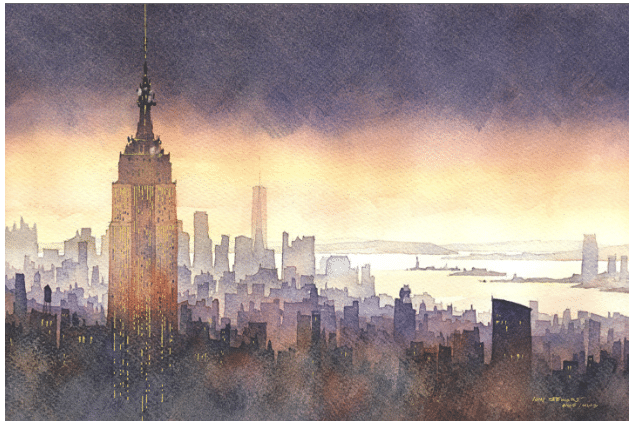
Iain Stewart, North Queensferry- Scotland ‐ Watercolor ‐ 14.5 x 21
Iain Stewart teaches how to transform photos into great watercolor paintings. Stewart’s approach includes how to adapt your painting to suit your needs using tools and techniques for dry brushing, color mixing, shapes and edge work, variegated wash and more. With Iain’s expert tips and tricks you will be painting watercolor landscapes full of light in no time. If you’re ready to learn watercolor landscape techniques, painting from photos, and how to paint a strong composition, download Stewart’s “From Photos to Fantastic: Painting Landscapes in Watercolor.”