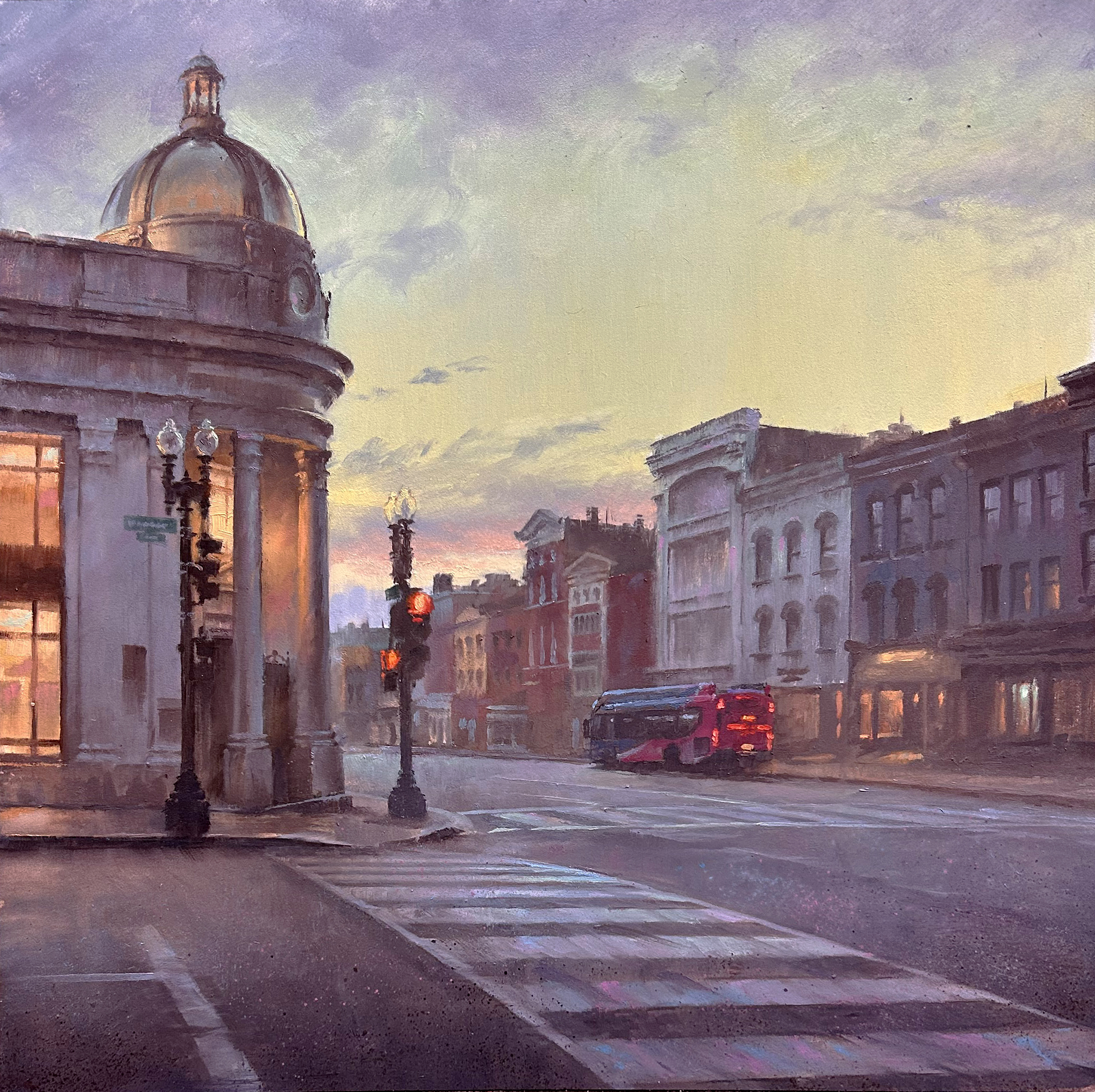
Picasso said inspiration has to find you working. Gavin Glakas gave it no choice.
When Principle Gallery asked him to deliver 12 new paintings for a joint show with fellow artist Steven Walker, the timeline was brutal. Thanks to an already busy schedule, he couldn’t start painting until November, and the opening was in February. Three months. Twelve paintings. Two kids. A process that depends on plein air studies, long walks, and the kind of quiet thinking time that — if you have children — you already know is basically a fantasy. So Glakas did the only thing he could: he got methodical about being creative. Here’s what that looked like.
SCHEDULED CREATIVITY
For Glakas, the pressure was real from the start. “If the stars aligned,” he says, “I might have time to finish the 12th painting on the day of the opening.” But simply racing to finish wasn’t the plan — and it wasn’t good enough. “I wouldn’t have time to be creative while painting. I wouldn’t have time to come up with ideas and follow my process if I was working day and night to finish 12 paintings.”
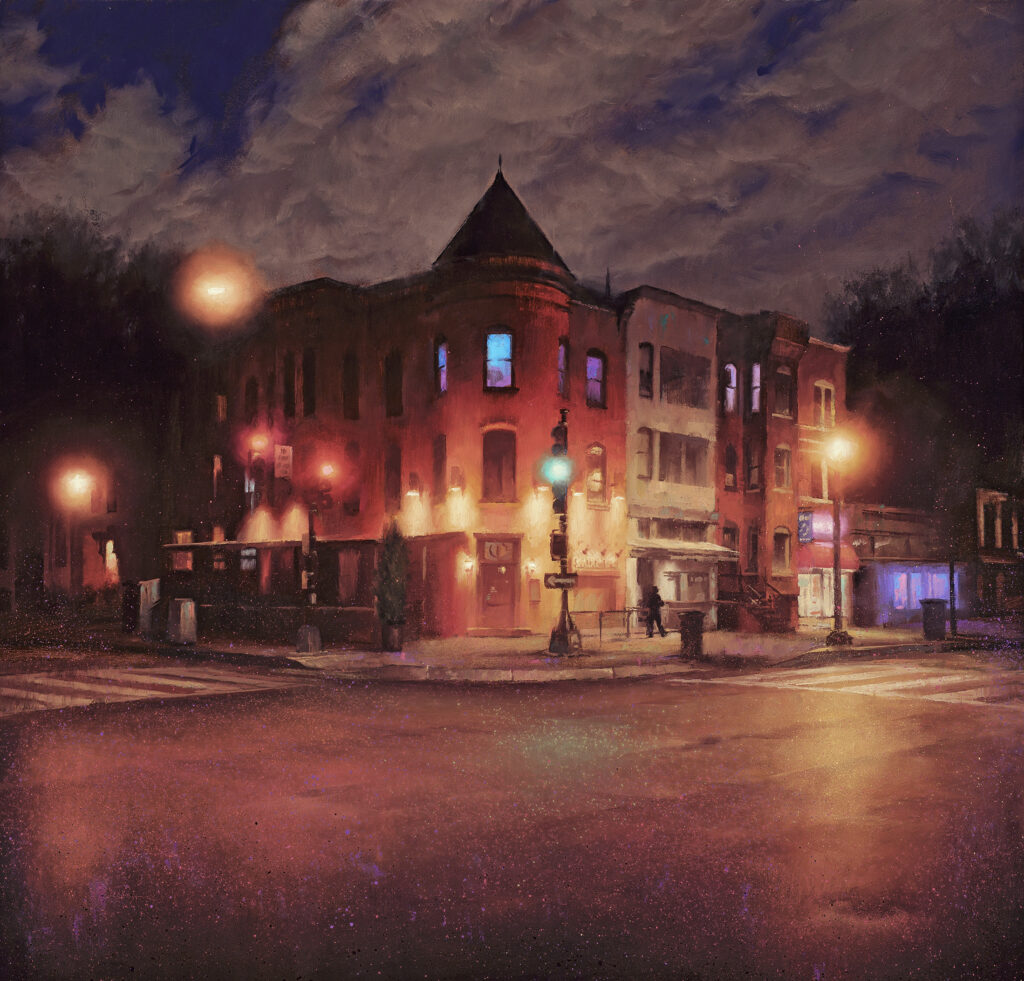
Gavin Glakas, “Electric 14th Street (Saint Ex),” oil on panel, 24 x 24 in.
His process, under normal circumstances, is anything but rushed. It means generating ideas, letting them marinate, and doing plein air studies before committing to a studio painting. But as a full-time artist and father of two, unscheduled alone time — the kind where ideas quietly take shape — is in short supply. “That alone time is when the ideas come and evolve,” he says. He knew the process had been slipping. This time, he was determined to do it right, even if doing it right meant doing something that felt almost contradictory: scheduling his creativity.
Glakas is drawn to urban scenes and tricky light — mornings and evenings, the hours he also wants to spend with his kids, in locations that rarely offer convenient parking. He doesn’t work from photographs if he can help it. “To do my best work, I do plein air studies to understand the light, color, and depth,” he explains. “These studies are quick paintings and sketches that aren’t meant to look good. They’re basically just information-gathering exercises — but they’re very difficult to fit into a busy life.”
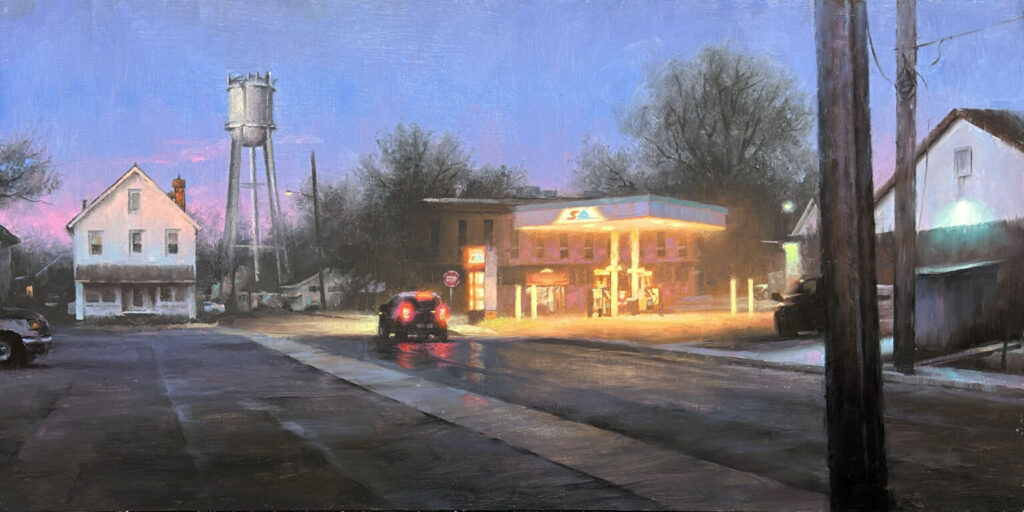
Gavin Glakas, “The Eastern Shore (Denton, MD),” oil on panel, 16 x 32 in.
So he started early. Six months before he could even pick up a brush for the show, he was plotting — filling his sketchbook with lists of places, lighting conditions, and moods he wanted to capture. The notes, scrawled in what he describes as “a hasty, borderline illegible hand,” read less like an artist’s journal and more like dispatches from a very focused mind:
Smithsonian castle golden hour. Twilight solitude. Electric explosion. Lincoln Memorial sunrise/sunset. Capitol Hill history row house rough. Eastern Shore peaceful stand by me.
Then, in August, his moment arrived. His wife and kids left town for a week. “Late nights and beer on the couch, you might ask?” he says. “No.” Instead, he woke before dawn every day, dragged his easel downtown for color studies at sunrise, spent his days working on commissions in the studio, then headed back out for more studies in the late afternoon and evening. By the end of the week, he had ideas, studies, and compositions for more than a dozen paintings he was genuinely on fire to paint.
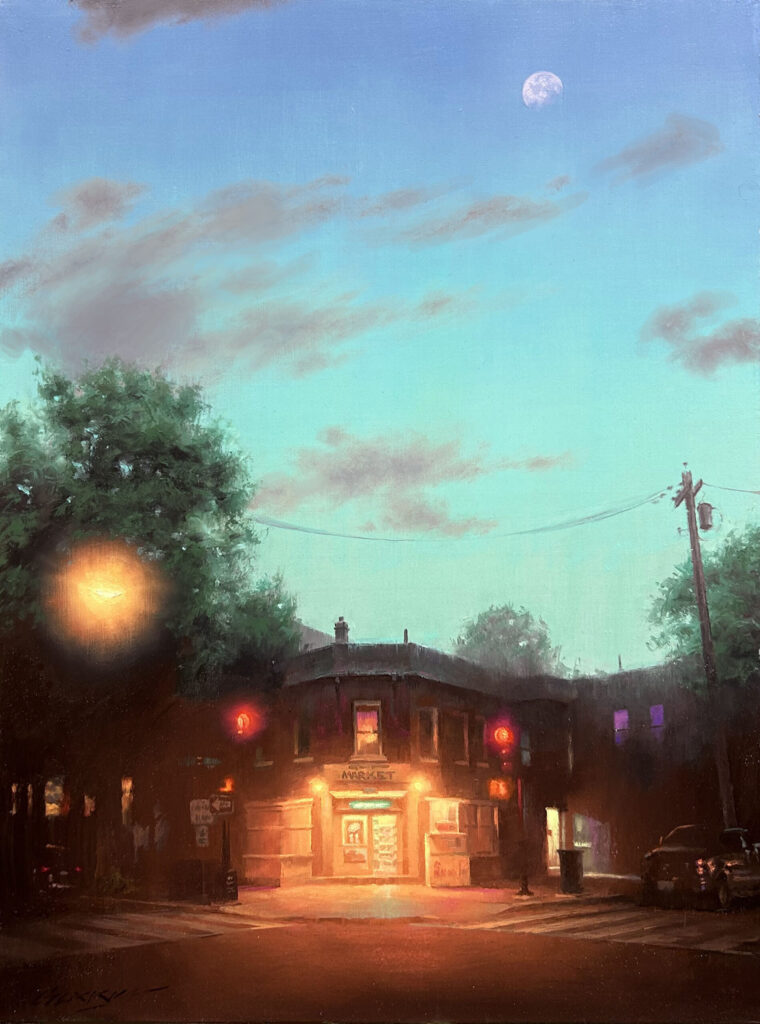
Gavin Glakas, “The Last Outpost (Capitol Hill),” oil on linen, 18 x 24 in.
And then — crucially — he stopped. For the next two months, he didn’t touch any of them. He completed other work, led a plein air workshop on a Greek island, and let the ideas quietly do what ideas do when you leave them alone. “What if I do this? What if I change that? I usually do it this way — but how else could I do it?”
By the time November arrived, Glakas was ready. Not scrambling, not guessing, not staring at a blank canvas hoping for a spark. Ready. “I could not have enjoyed this process more,” he says, “and due to my scheduled creativity, when the time came to actually paint the paintings, I was ready.”
Picasso, it seems, was right. But so was Glakas — sometimes the best way to find inspiration is to build it a very detailed itinerary.
On view at Principle Gallery (Alexandria, Virginia) through March 23, 2026, “Proximate” brings together new work by Washington, D.C. artist Gavin Glakas and Georgia-based painter Steven S. Walker that explores the landscapes and neighborhoods of the DMV — the metropolitan region comprising the District of Columbia, Maryland, and Virginia, centered around Washington, D.C.
WORKS BY STEVEN S. WALKER IN “PROXIMATE”
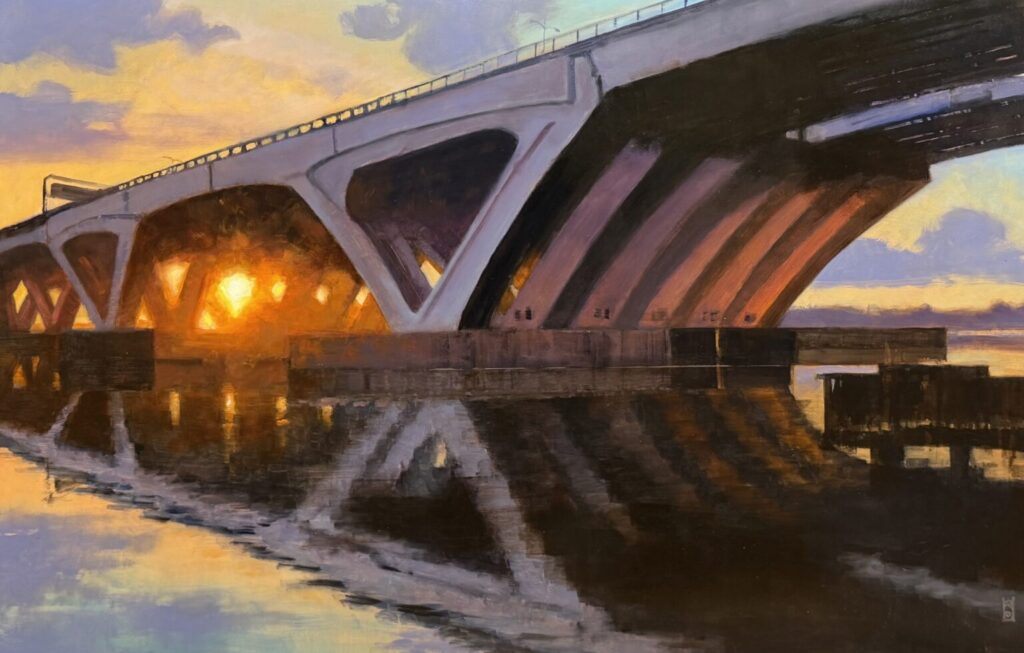
Steven S. Walker, “Wilson,” oil on panel, 24 x 36 in.
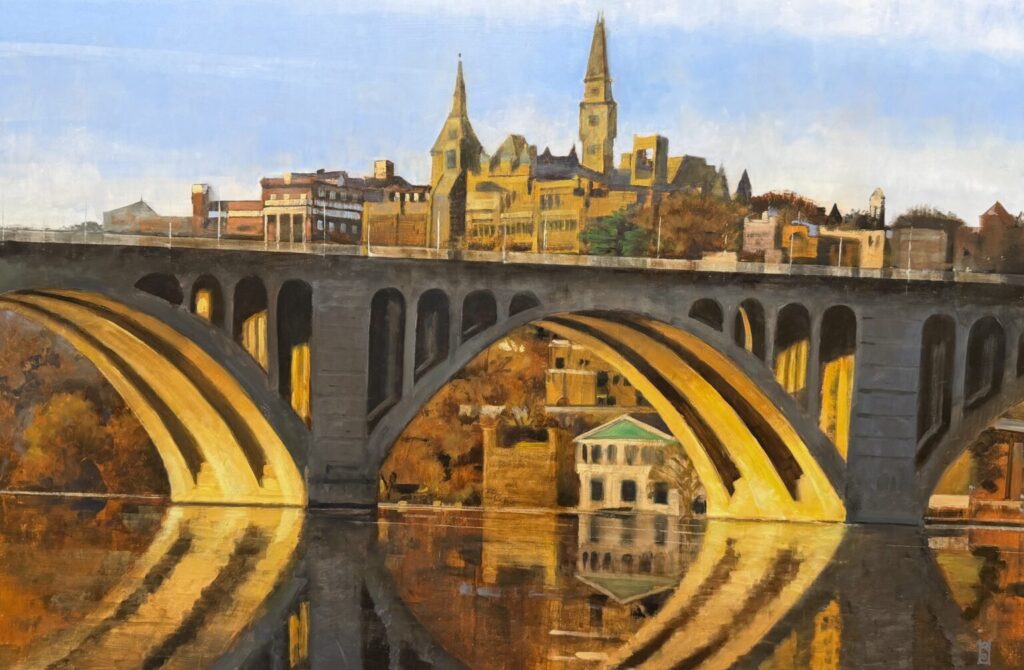
Steven S. Walker, “Key to the City,” oil on panel, 24 x 36 in.
Have you ever wished you could simply bottle up the “golden hour” into a tube and just pour it onto your canvas?
In GLOW – CREATING DEPTH, ATMOSPHERE AND VIBRANT SUN, Gavin Glakas shares his best advice on how to create depth, atmosphere, and the glow of blazing sunlight on a late summer afternoon.