It has never been the most glamorous medium. Overshadowed by oil on one side and watercolor on the other, gouache has spent much of art history quietly doing remarkable things in the hands of remarkable painters — many of whom never made much fuss about using it.
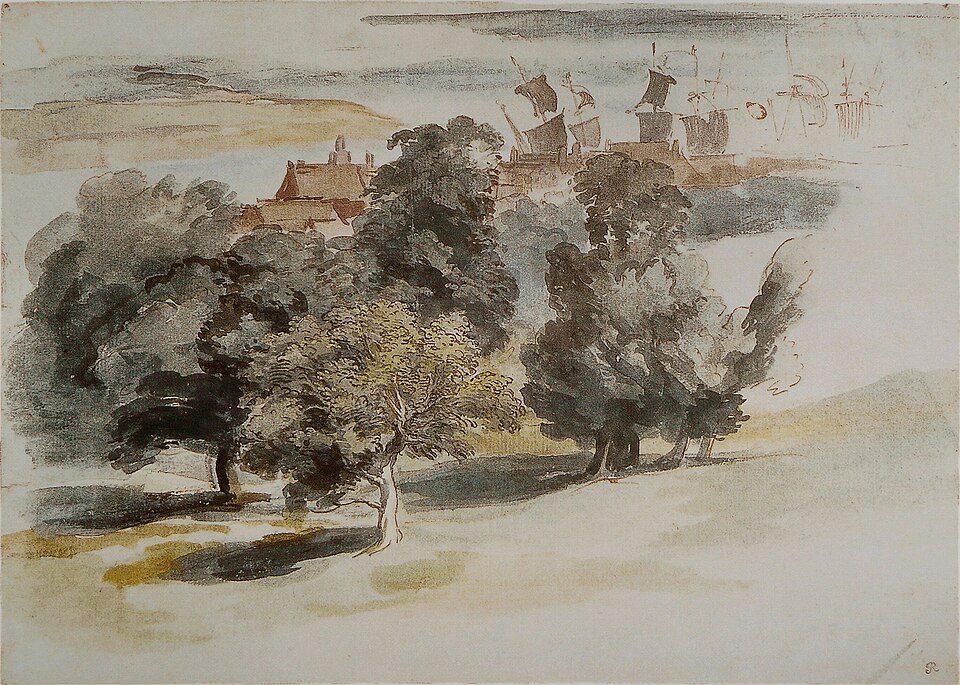
“An English Landscape,” Anthony van Dyck (1599–1641), circa 1635, watercolor and gouache with pen and ink, 7.4 x 10.4 in., Barber Institute of Fine Arts
Gouache — opaque watercolor, essentially, with a chalky, matte finish and a luminosity all its own — has a history stretching back to medieval manuscript illumination. But it found its way into the hands of serious fine artists gradually, valued for qualities that neither oil nor transparent watercolor could replicate: the ability to work light over dark, to achieve flat areas of pure, intense color, and to paint with a directness and speed that suited artists who needed to capture the world quickly and accurately.
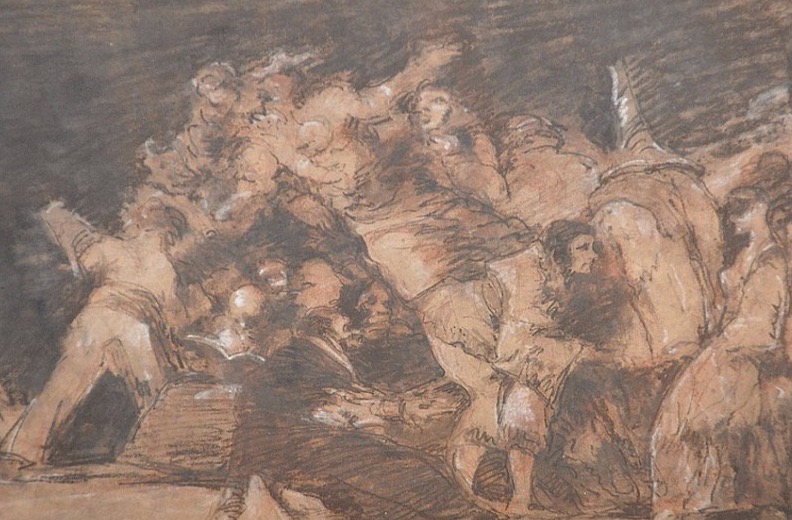
“Study for Desparates plate 9 – Universal Folly Disparate General,” Francisco de Goya (Spanish, 1746-1828), gouache on paper
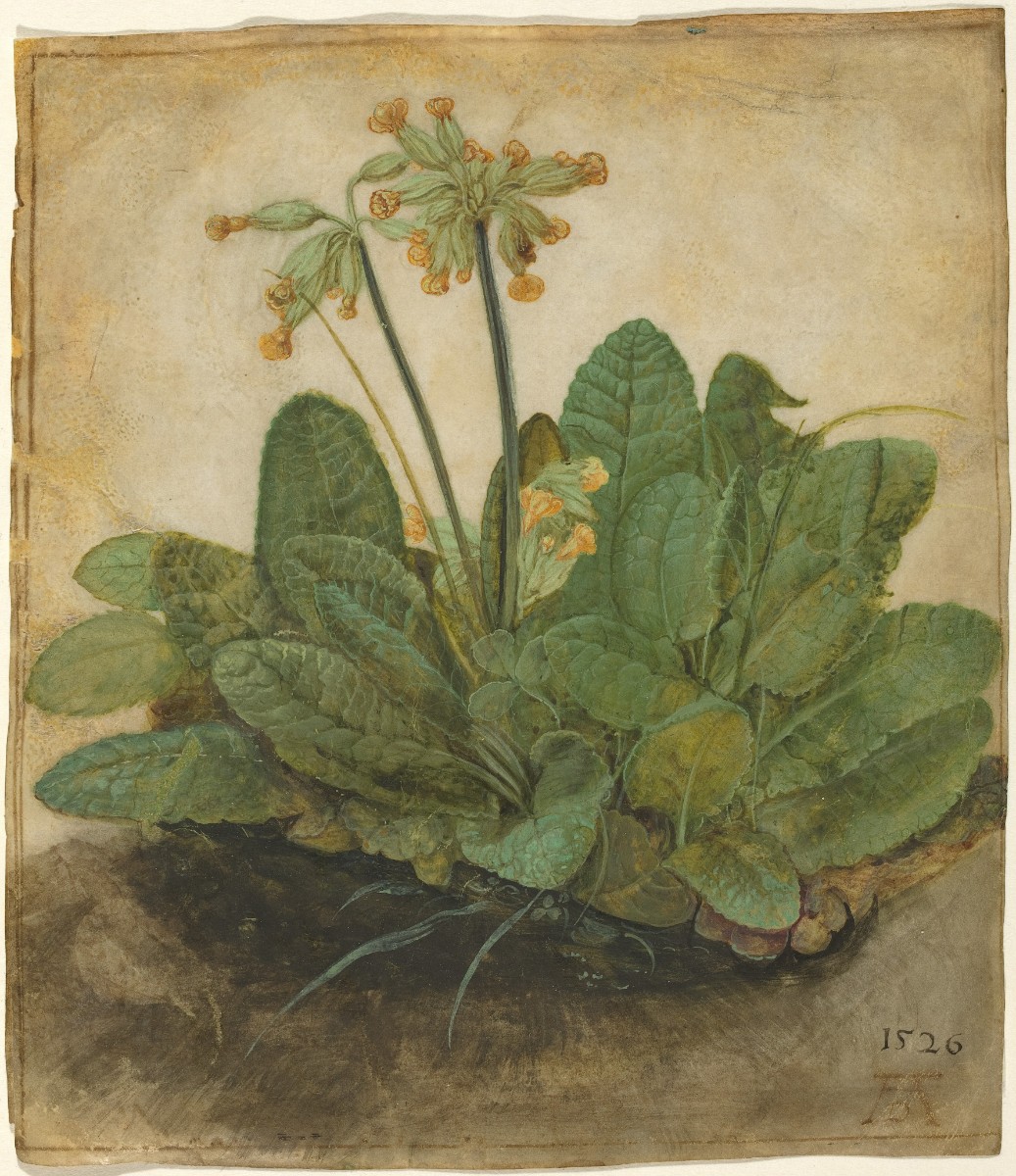
Among the first major artists to embrace it was Albrecht Dürer, who used gouache in his meticulous nature studies in the late 15th century — his famous painting of a young hare among them. Anthony van Dyck used it for preparatory sketches. Francisco Goya turned to it for intimate, small-scale works that have an immediacy his large oil paintings rarely match.
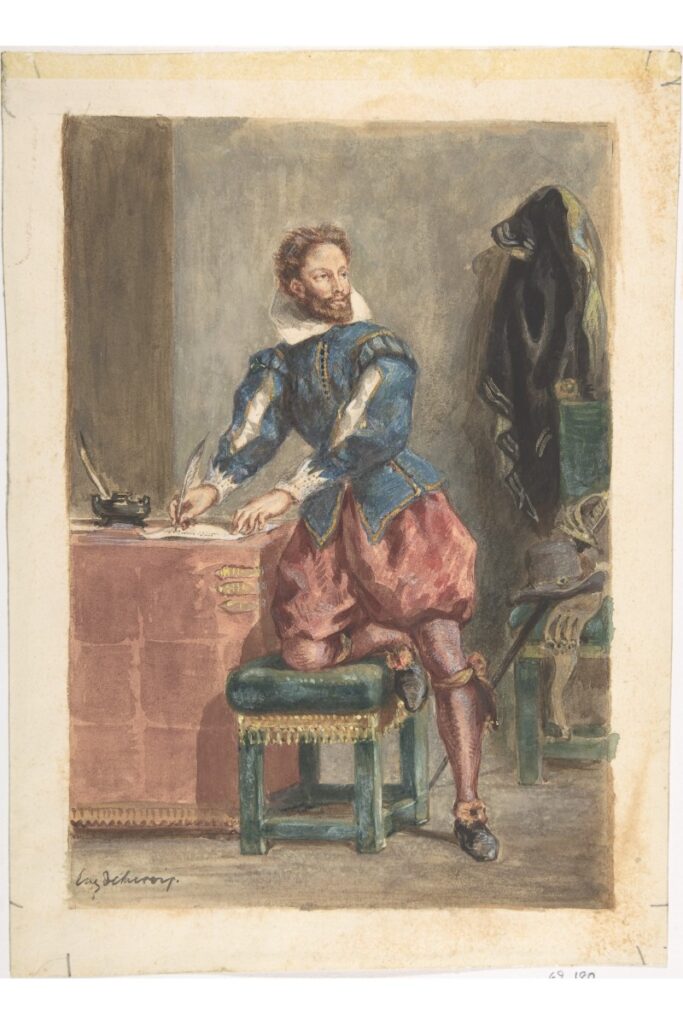
“Mathurin Régnier,” Eugène Delacroix (French, 1798–1863), ca. 1846, watercolor and gouache over traces of graphite on wove paper, 12-1/8 x 8-13/16 in., The Metropolitan Museum of Art
By the 19th century, gouache had found a natural home among painters who worked outdoors. Eugène Delacroix used it on his travels to Morocco, finding it ideally suited to capturing brilliant light and saturated color quickly. Winslow Homer worked in gouache extensively, using it to build luminous, complex surfaces in his seascapes and figure studies — works that stand comfortably alongside his celebrated watercolors in terms of ambition and achievement.
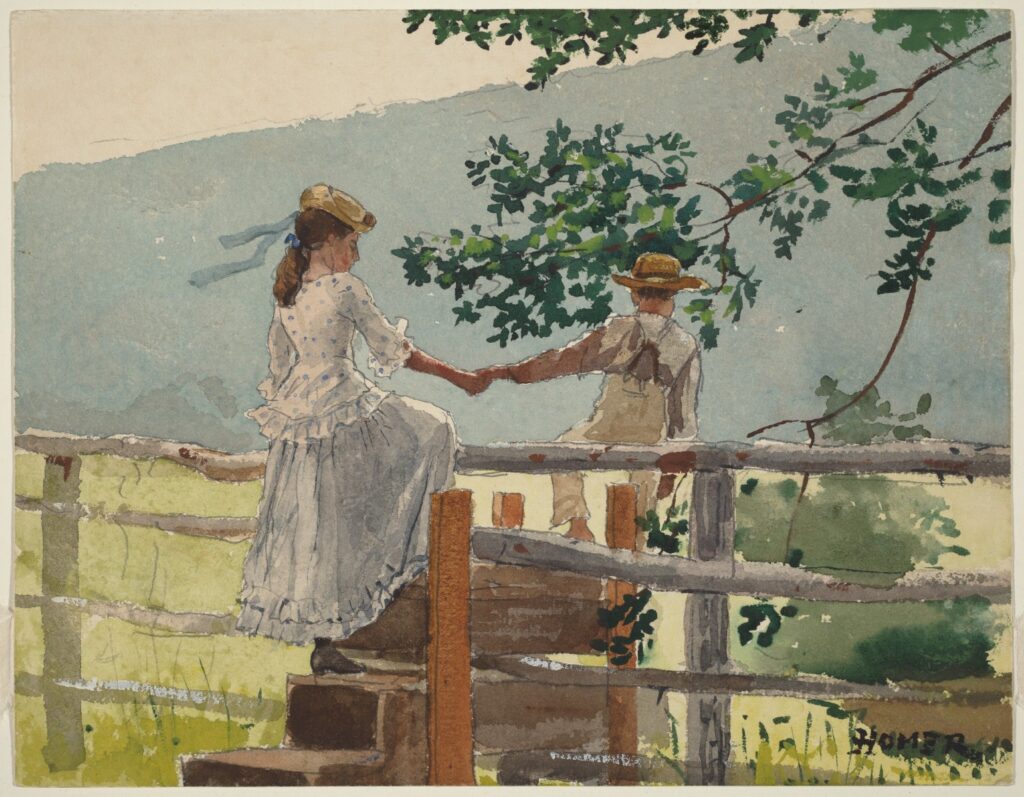
“On the Stile,” Winslow Homer (American, 1836 – 1910), 1878, watercolor, gouache, and graphite on wove paper, 8 11/16 × 11 3/16 in., National Gallery of Art, Collection of Mr. and Mrs. Paul Mellon
The 20th century brought gouache fully into the mainstream. Henri Matisse used it for his famous cut-outs, working with sheets of paper painted in pure, flat gouache to create some of the most joyful and influential works of his career. Paul Klee made it central to his practice, exploiting its opacity and color intensity to build the luminous, jewel-like surfaces his work is known for. And in the United States, American Scene painters including Ben Shahn and Jacob Lawrence used gouache to powerful effect — its flat, graphic quality well suited to the social realism they championed.
What unites all of these artists is an appreciation for what gouache does that nothing else quite can: its capacity for rich, immediate color; its willingness to be reworked; and its particular quality of light — neither the glow of watercolor nor the depth of oil, but something quietly, stubbornly its own.
Five hundred years of artists can’t be wrong. If this history has you curious about what gouache might do in your own hands, Gouache Live, August 20-21, is the perfect place to find out — an immersive event dedicated entirely to the medium, led by artists who have made it their own.