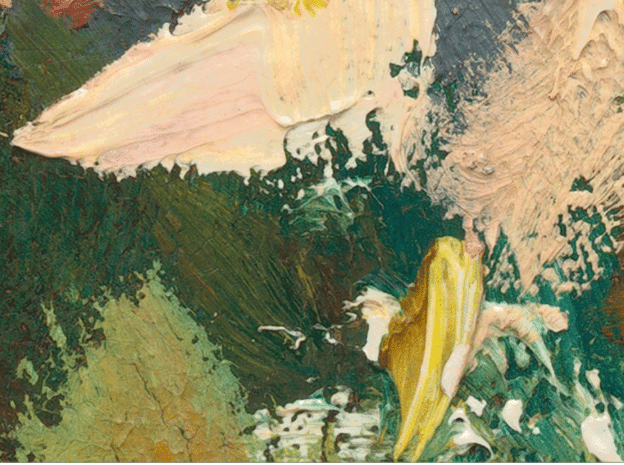
In fact, most ordinary mortals will never get this close to a painting by John Singer Sargent in real life.
Anyone can do so online however, thanks to the National Gallery in Washington, D.C., which has posted Sargent’s 1911 master landscape, Simplon Pass, as a super-high resolution detailed image here on its website.
There you can zoom in, move around, and examine every astonishing sixteenth of an inch of this work in person.

The demands placed on John Singer Sargent by his unparalleled success as a painter of Gilded Age portraits on both sides of the Atlantic began to tire him soon after the turn of the 20th century. In 1907–1908 he declared that he was “shutting up shop in the portrait line” to focus on landscapes, informal figure studies, and mural paintings such as those at the Boston Museum of Fine Art and the Boston Public Library.
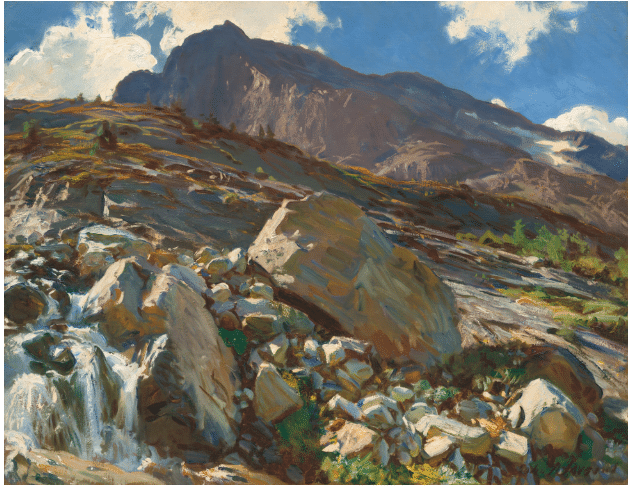
John Singer Sargent, Simplon Pass, oil, 28 1/4 × 36 7/16 in. (1911)
The artist undertook his landscape and figure paintings in oils and watercolors on many leisure visits to picturesque locales with friends and relatives, including this great Alpine pass in Switzerland near the border of Italy.
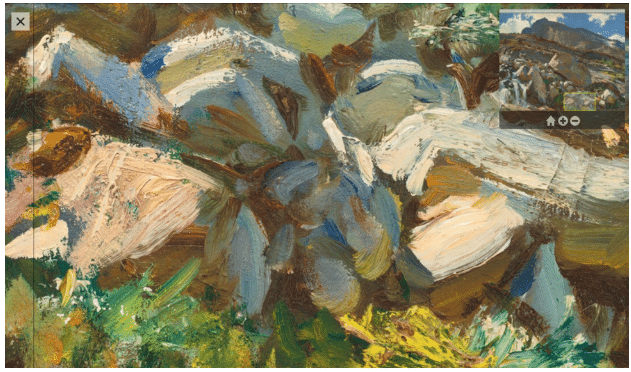
He probably visited and sketched the view depicted in Simplon Pass as early as 1904, and returned for extended visits in 1909, 1910, and 1911. More than simply a document of the distinctive silhouette of the Hübschhorn and its surroundings, the view is a study of the clear Alpine light and air on the rocky terrain.
The seemingly infinite variety of brushwork that endowed Sargent’s vibrant portraits also enlivens this landscape (and others like it), describing the rushing stream at left, the colorful vegetation, and the dazzling sunlight sweeping across the foreground.
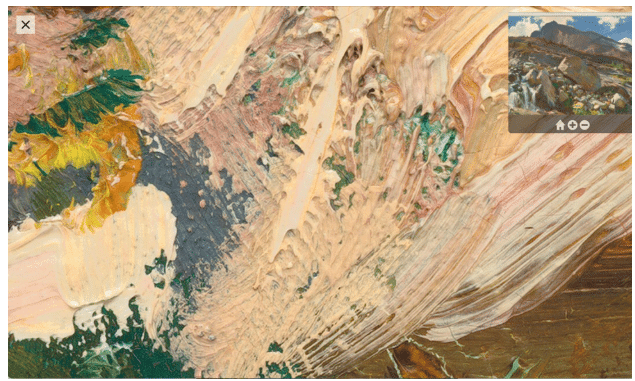
The darker, drily brushed middle ground sets off the majestic peak. Here, too, light and shade define strong masses; while the mountain is mostly in deep shadow, passages of mauve emphasize its steep face.
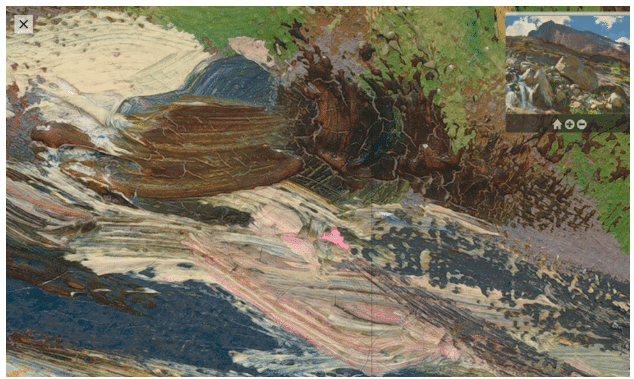
Thin, hazy clouds and pockets of snow connect its long slope to the brilliant sky above, which in turn harkens back to the sunlit foreground.
Sargent’s deft manipulation of the painting’s registers did not go unnoticed. When wealthy Ohio industrialist James Parmelee lent the painting to the Corcoran Gallery of Art in 1914, one critic deemed the canvas “brilliant and self-assured . . . [the artist] has outdone himself in juggling with perspective, and [gives] the result a look of spontaneous unconcern.”
Warning: A very close look at this work and others like it may permanently change the way you think about painting!
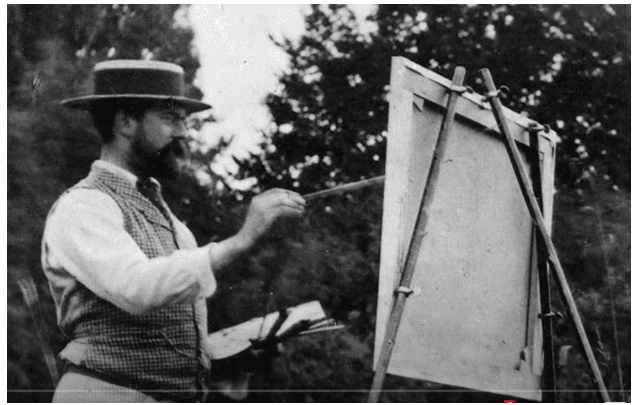
John Singer Sargent at work en plein air.
If you’re looking to try your own hand at Sargent’s style, Thomas Jefferson Kitts has you covered in his video, Sargent, Techniques of a Master.
Why Art Isn’t Supposed to Look Nice
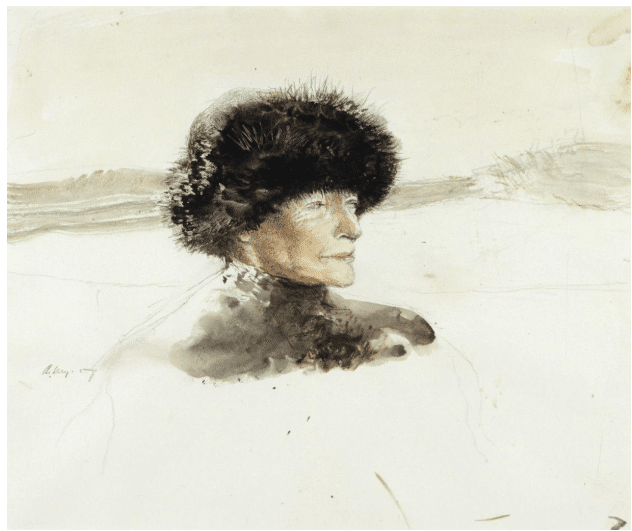
Andrew Wyeth, Tundra Study, 1933, Watercolor.
“Eleanor was right. She never looked nice. She looked like art, and art wasn’t supposed to look nice; it was supposed to make you feel something.”
― Rainbow Rowell, Eleanor & Park
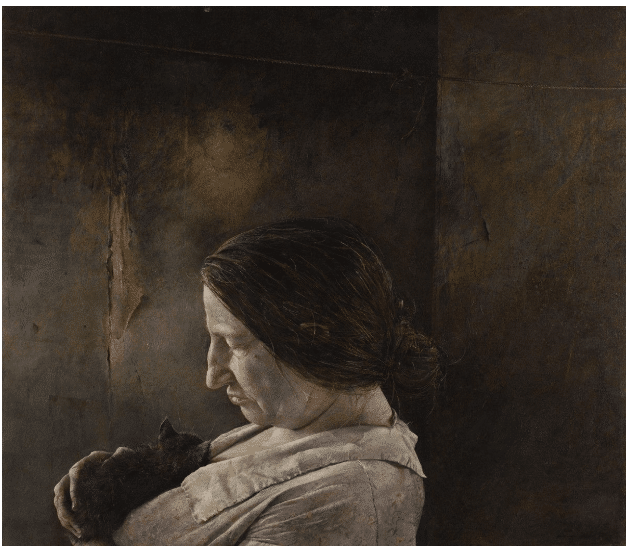
Andrew Wyeth, Miss Olsen, 1952, Tempera.