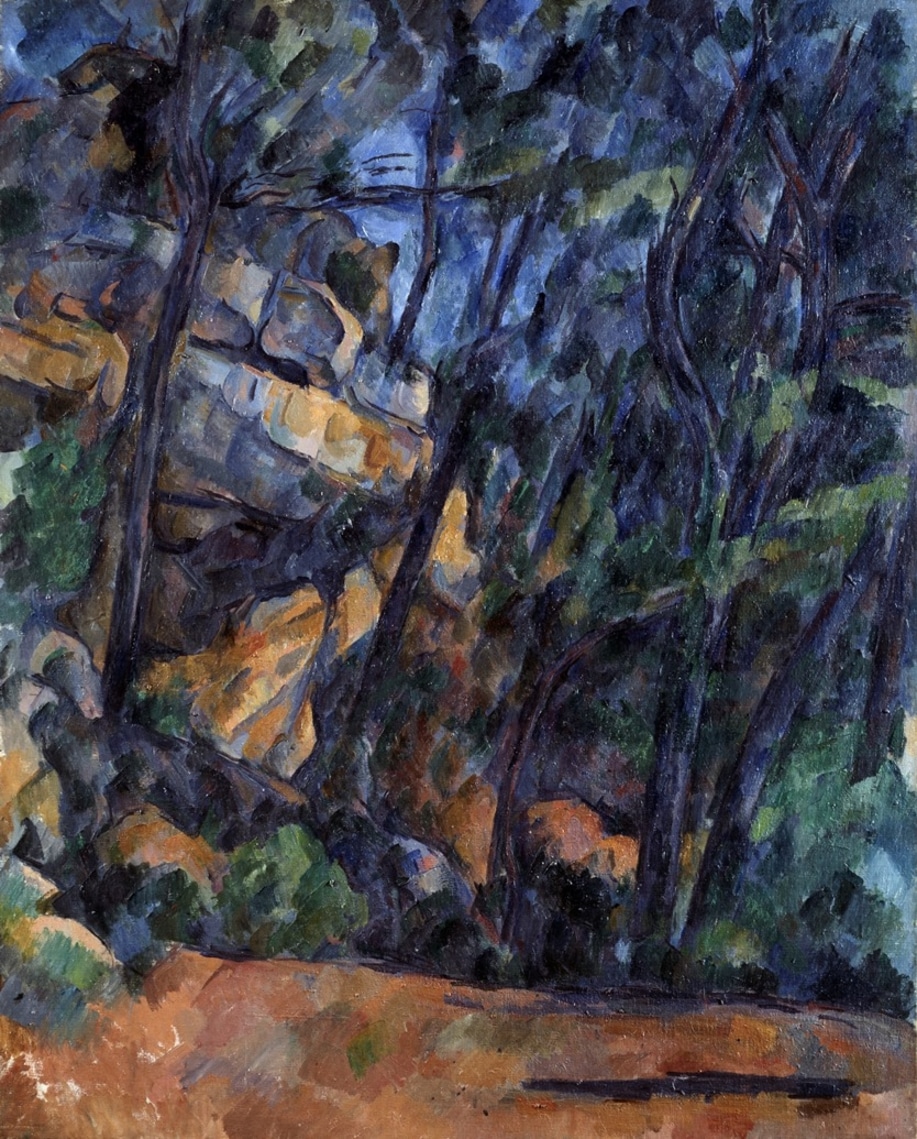
Modern art has changed so much over the last 100 years that it’s hard for us to see what all the fuss is with Paul Cézanne.
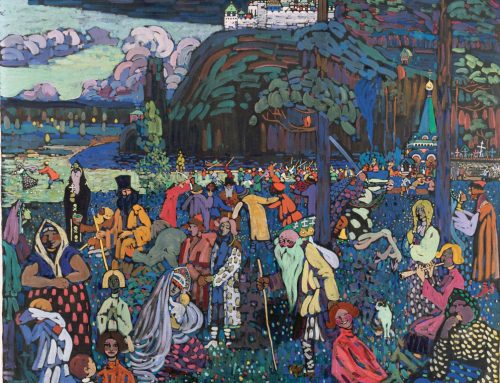
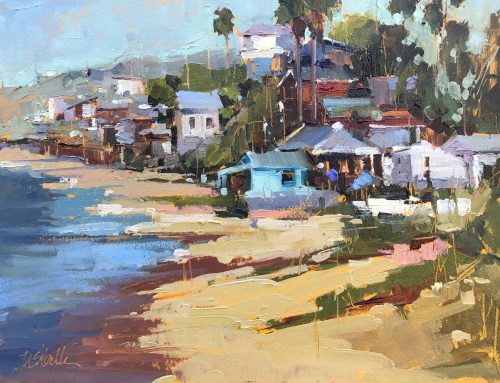
Although to us it looks totally tame, when Cézanne painted Trees and Rocks in the Park of the Château Noir sometime around 1904, to most art lovers the painting would have seemed utterly bizarre. It looked nothing like the previous 300 years of pastoral paintings (c. 1650), the poetic vignettes of the French Barbizon style (c. 1830), the work of the Impressionists (c. 1879), the Hudson River School (c. 1860), or the Tonalists (c. 1900) – see below for a nifty visual timeline of Western landscape painting.

Landscape painting, 1640 – 1900 (l-r) Pastoral, Barbizon, Impressionism, Hudson River School, Tonalism
Curator Markus Stegmann of the Museum Langmatt, which holds Cézanne’s Château Noir, walks us through the painting and why it was so unprecedented and why Cézanne was so influential.
First of all, Stegmann says, the subject seemed off – instead of showing his 19th century audience the picturesque ruins of the title, Cézanne focuses on an unremarkable tangle of trees growing in an otherwise uninteresting plot of all-too ordinary ground.
“While we might think we can make out the ruins of the Château Noir somewhere in the depths of this dark wood,” writes Stegmann, “it is not the central motif of the picture. Instead, the focus is on the trees and rocks; in other words, upon a relatively unspectacular sample of nature that is not necessarily “picture-worthy” by the traditional arts standards of the epoch (at least not as the main motif).”
Cézanne chose the park of the Château Noir not for any other reason than that there he could paint nature undisturbed. “The trees and rocks might in theory be located in many other places in the South of France,” says Stegmann. For the first time in history, a landscape painter is “concerned with something different: with design principles that go beyond external nature.”
“In this interweaving of stones, soil, and plants, Cézanne saw a fascinating dynamic rhythm of form and colors,” stegmann writes, which he deliberately portrayed as surfaces as kaleidoscopic shapes and shards of colored paint.
“By additionally concentrating the diversity of colors into the triad of green, blue, and orange/ocher so typical of his artworks, he succeeds in detaching the motifs from their ties to the world of objects.
These are two revolutionary artistic decisions that make his pictures unmistakable, anticipating the early Cubism of just a few years later:
“The independence of colors and forms from the object that they describe, the freedom that they achieve to deviate from the traditional description of the motif in order to follow their own physical and emotional energy; these are the things that mark out the paintings of Paul Cézanne and make him the most important and most innovative of all the (Post?)Impressionists. It marked a significant turning point for the future of painting.”
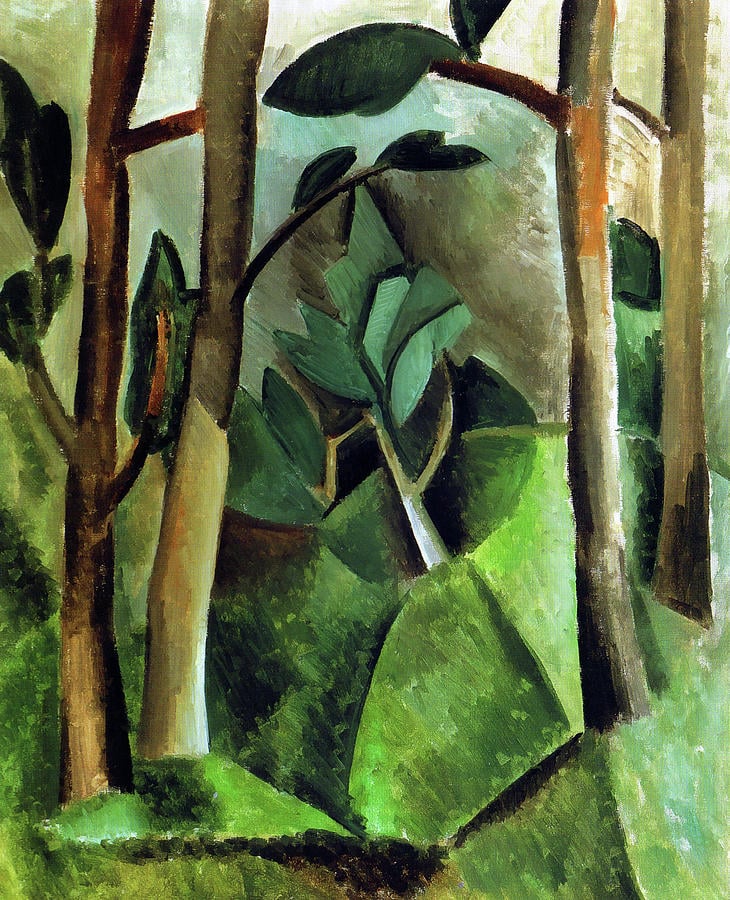
Pablo Picasso, Landscape, 1908
Picasso and Matisse, those two giant pillars of Modern art, both recognized in Cezanne’s radical approach to painting the possibility of an art that needn’t copy nature to express artistic beauty and truth. “I point the way,” said Cézanne, “Others will come after.”
Picasso called Cézanne “the father of us all,” because Cézanne was the first Western artist to devote himself to exploring the nontraditional potential of Western painting, and in so doing led the way toward what we know today as abstraction.
Cezanne in Trees and Rocks in the Park of the Château Noir painted the woods not the way they looked but the way they presented themselves to his excited, imaginative eye. He chose his colors and shapes for their expressive qualities rather than their ability to render an accurate copy of nature. Individual trees, plants and stones “give way in favor of the vibrant weave of color.”
It’s as if in the wood’s dark (“noir”) shadows and rhythmic weavings of color and form Cezanne has hinted at the formative power of nature itself, painting not the particular leaves, stones, earth and sky, but the beautiful chaos from which all these things emerge, take form, and dissolve.
“Cézanne looks through the trees, so to speak, to see the structure of nature,” writes Stegmann. “Cézanne has definitively parted company with the subject matter, allowing us to sink into abstract blue, green, and gray tones. Here, color is freed from its traditional, centuries-old task of describing the world. Instead, we experience this wood as a place of yearning that offers us the possibility of immersing ourselves in the secret of the eternal coming into being and passing away of nature.”
That legacy continues in contemporary work by many artists, such as Vermont painter Eric Aho, who also paints at the boundary of abstraction and landscape. As one writer wrote of his work, doing so allows him to “construct compositions that can feel as electric, as comforting, or as confusing as nature itself.”
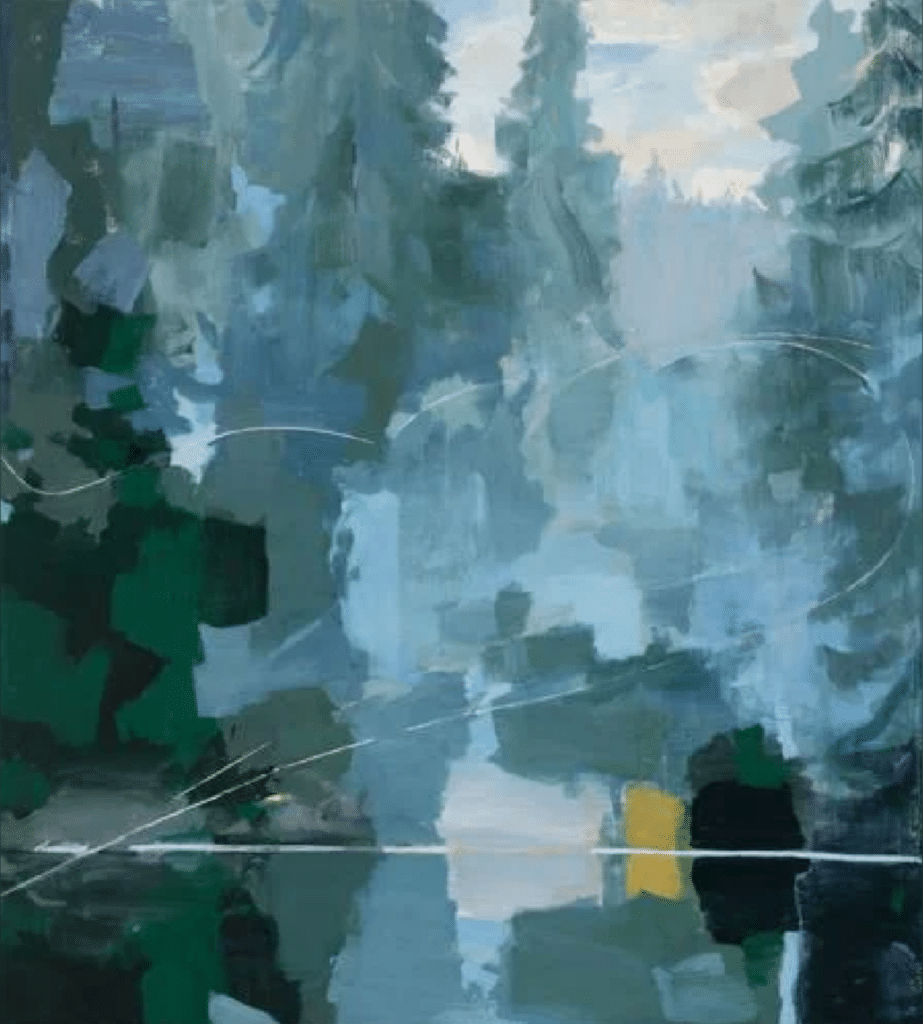
Eric Aho, Water Line, oil, 2019, 78 x 70 in.
“A vibrating current of electricity dwells just behind everything in nature and the encounter with the painting,” Tim Weed has written about his paintings. Aho’s work, “links you to that current, if only for a fleeting instant. A connection is made between you and something larger. Something important and true.”
There’s a relevant and inspiring bundle of two videos available bringing together two major masters, John MacDonald and Nicholas Coleman. These two videos are designed to quickly get you creating paintings that convey emotion and tell meaningful “stories.’ MacDonald also covers sketching outdoors in anticipation of painting larger-scale poetic landscapes in the studio. Check out the specially priced Nicholas Coleman/John MacDonald Landscape Combo if you’d like to be creating artwork that is breathtaking in appearance that will also lead the viewers through the “story” – be it your own truth, your love of nature, beauty, or color – that your work is telling.
Plein Air Live kicks off!
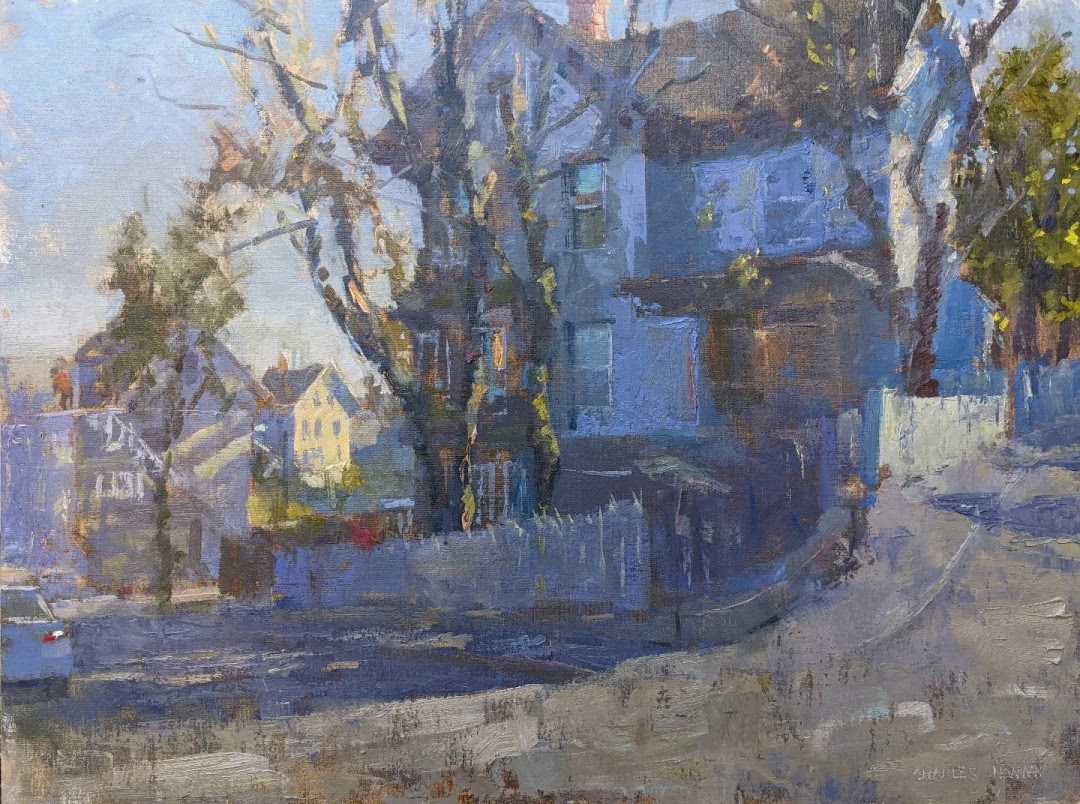
Charles Newman, “Corner of Riggs Street,” oil, 18 x 24 in. the latest winner of Plein Air Magazine’s monthly Plein Air Salon. |
The largest online art-education event, Plein Air Live, gets underway this week. Over 30 top-notch instructors are giving demos and the energy is high. Check it out here.